Monet Madness: A Road Trip from Paris to Giverny, Rouen and Étretat
Travel inspiration can strike at any time, and you can find yourself in far-flung places chasing a landscape from a movie, a legend from a book, or a dish a friend raved about. Many years ago, I saw Monet’s captivating painting of Étretat’s cliffs in a museum and dreamt of seeing it in person someday. So on a recent trip to Paris, I decided to carve out some time for a road trip to Giverny, Rouen, and Étretat. My path wound through Normandy, leading to the very places where Claude Monet and his contemporaries painted light, color, and fleeting moments into history. Whether you’re an art enthusiast, a history buff, or simply a traveler searching for inspiration, this Impressionist road trip from Paris combines it all on a journey through charming towns and dramatic coastlines.
Why take an Impressionist Road Trip from Paris?

Paris may be the birthplace of Impressionism, but to truly understand the movement, you need to follow the artists beyond the city limits. In the late 19th century, Monet and his peers left the studios of Paris in search of fresh air and shifting light. They found it in Normandy, a region where skies were never the same from one moment to the next, rivers shimmered like mirrors, and the rugged coastlines felt alive with energy.
Their ability to paint these fleeting impressions was made possible by a simple but revolutionary invention: the paint tube. Before the 1840s, artists had to grind pigments and mix them in the studio. With paint now sealed in portable tubes, they could work en plein air, or directly in nature, capturing landscapes as the light changed in real time. Normandy’s gardens, cathedrals, and seascapes became not just subjects but living laboratories for this radical new approach.
Taking an Impressionist road trip from Paris means stepping into those very landscapes. In Giverny, Rouen, and Étretat, you’ll see the iconic paintings hanging on museum walls come to life. More than a sightseeing journey, it’s an invitation to experience France as Monet once did: outdoors, immersed in beauty, with every passing cloud reshaping the view.
How many days will I need?
You can take this particular road trip in as little as 2 days, spending one day in Giverny and Rouen, and the next in Étretat. However, I recommend a minimum of 3 days; half a day in Giverny, a day and a half in Rouen, and a final day in Étretat. Of course, there’s always the option to slow it down further and add more stops along the way.
Giverny: Monet’s House and Garden
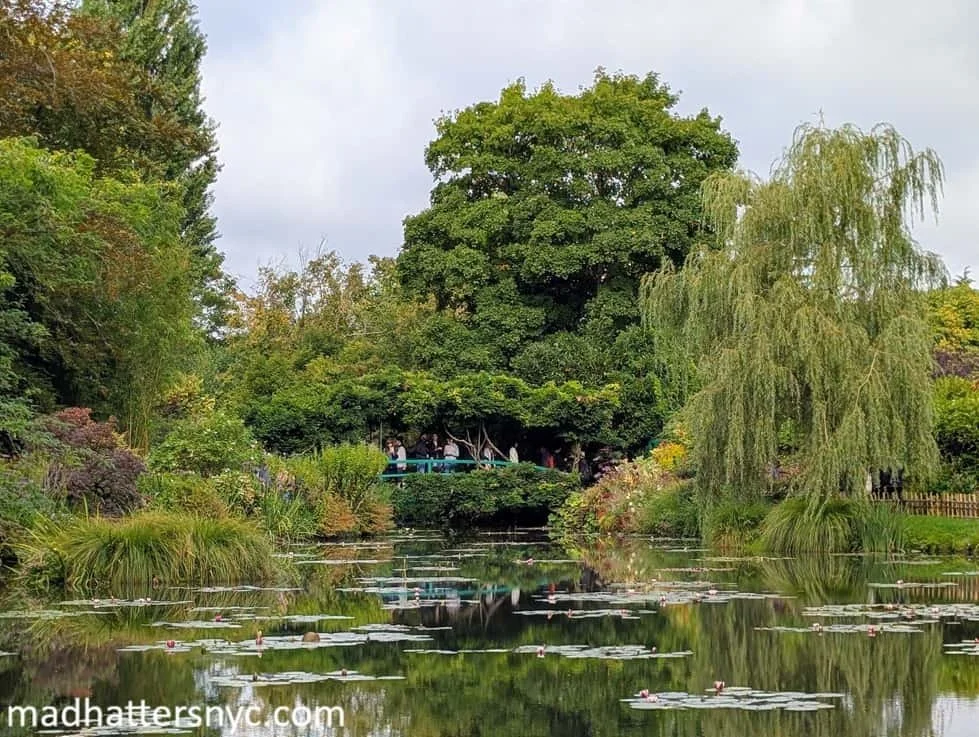
Monet’s Japanese Bridge and Water Lily Pond
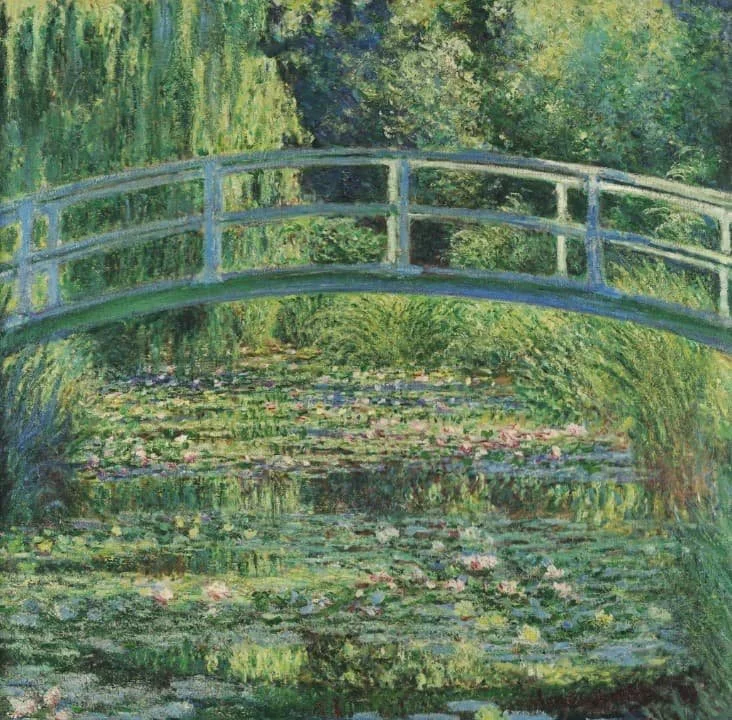
The Water-Lily Pond by Claude Monet
If there is one place where art and reality blur seamlessly, it’s Giverny. Just over an hour’s drive from Paris, this quiet village became Claude Monet’s refuge in 1883 and remained his home for more than forty years. At the time, the sleepy hamlet on the banks of the Seine was little more than a cluster of stone houses and apple orchards. But for Monet, it was a revelation. Here, he found the light, tranquility, and inspiration he had long sought in the city.
With typical devotion, Monet transformed his property into a living canvas. The Clos Normand, his flower garden in front of the house, was tended meticulously, with every bloom creating constant motion and variation throughout the seasons. Later, he purchased a plot of land across the road and dug out the Water Garden, diverting a nearby stream to form the pond that would forever change the course of his art.
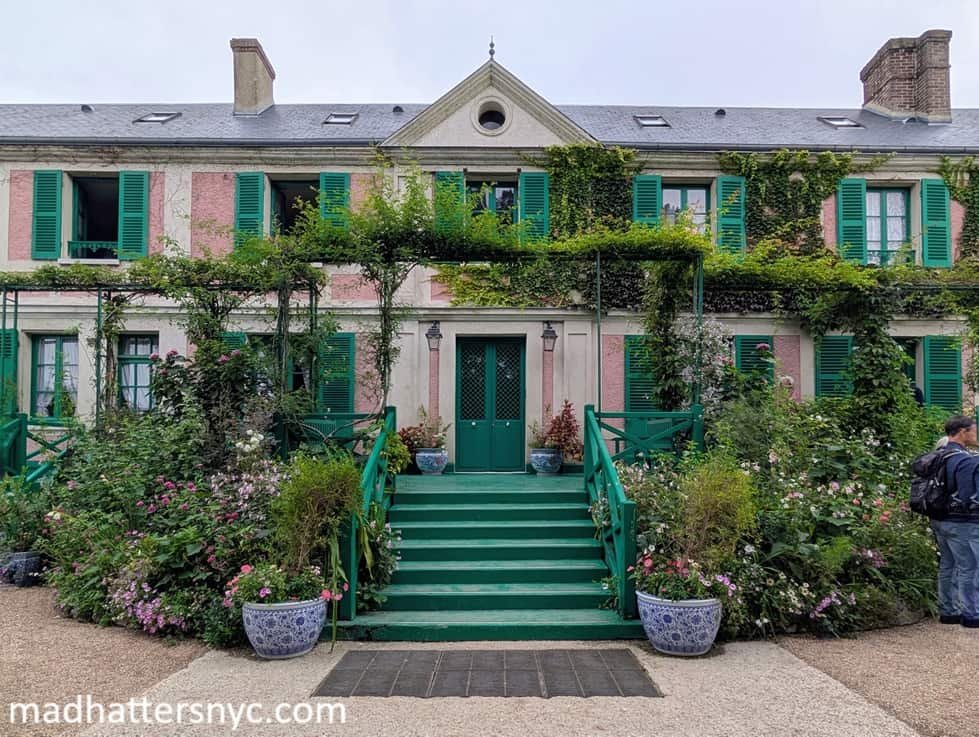
Monet’s House
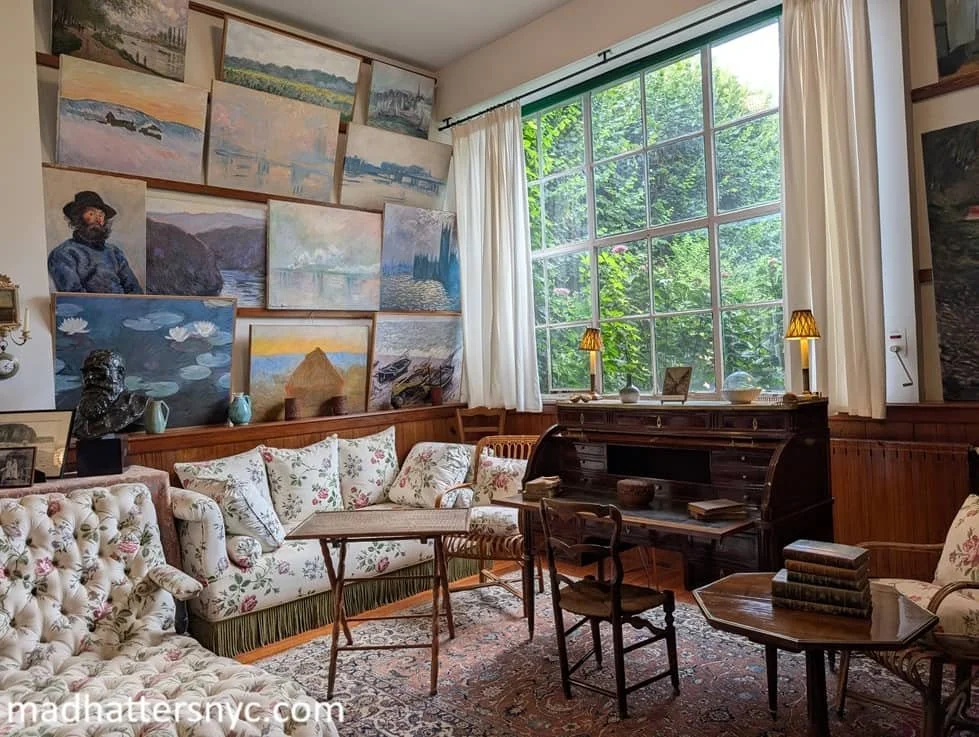
Monet’s House interior
It was here, surrounded by the shimmering reflections of sky and lilies, that Monet produced some of his most iconic works. Over the years, he painted more than 250 versions of his Water Lilies, as well as the delicate Japanese Bridge, the rippling Wisteria, and the clouds mirrored in the pond’s surface. In his later years, as his eyesight dimmed, his brushstrokes became broader, his colors more abstract, a preview of modern art to come.
Today, the Fondation Claude Monet maintains the house and gardens much as they were in the artist’s time. Volunteers and gardeners replant the same varieties Monet grew, ensuring that every turn of the path feels faithful to his vision. The house itself is filled with personal touches: the cheerful yellow dining room, Monet’s collection of Japanese prints, and windows that overlook the beauty outside.
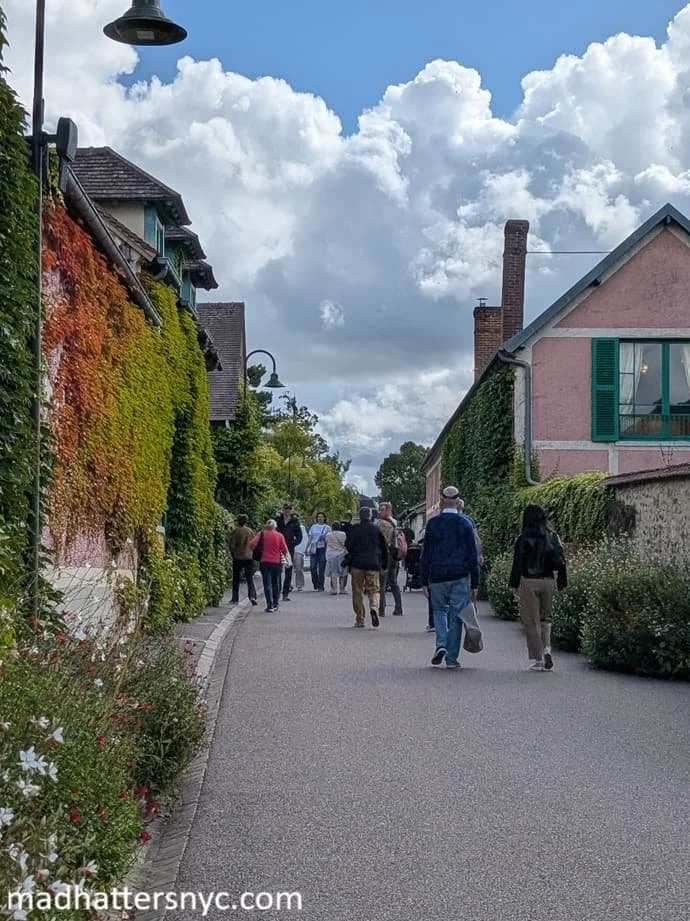
Giverny today remains a small village and is best explored on foot. Stroll down Rue Claude Monet, where ivy-draped cafés and small artist studios invite you to pause for coffee or a sketch. Nearby, the town of Vernon offers charming riverside views and the Old Mill of Vernon, immortalized in many Impressionist paintings.
Travel Tips for Giverny
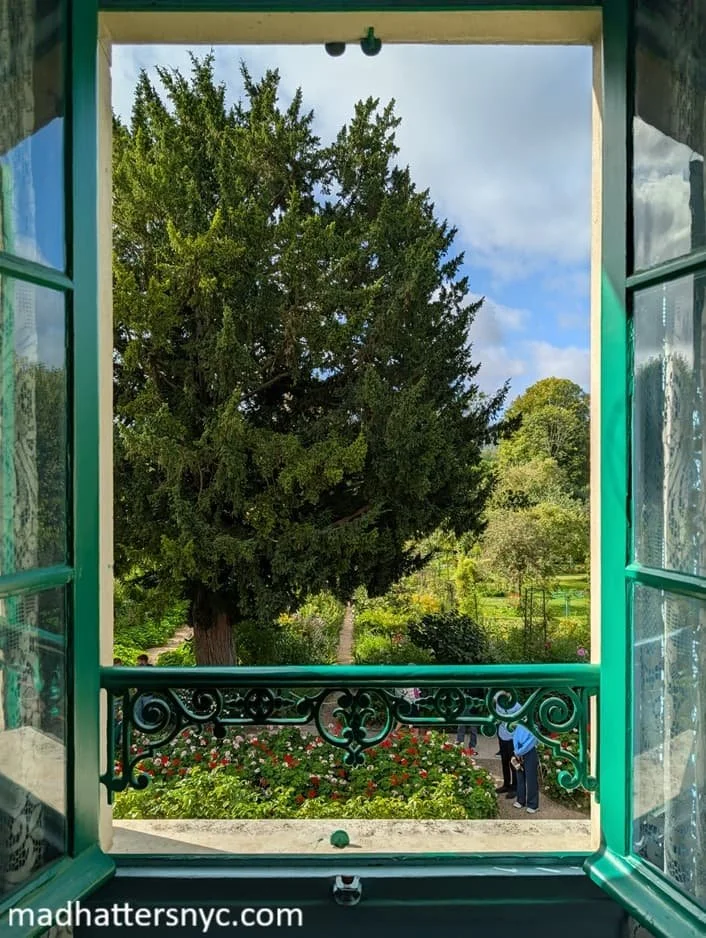
The drive from Paris Charles de Gaulle airport to Giverny is just slightly over an hour. I arrived right before the Monet’s House and Gardens was scheduled to open at 9:30 am, and there was ample parking in the lot across from the gardens itself. Even if you’re not arriving at the start of the day, there are several other parking lots within walking distance.
You may see recommendations to arrive early or late in the day, but Monet’s Garden is extremely popular so crowds are unavoidable. I arrived right before the gardens opened and still encountered hordes of Monet lovers. Adjust expectations accordingly.
Buy tickets online in advance to avoid wasting time in line during peak tourist seasons. But please note, tickets are only valid one hour from the ticketed time and are non-refundable, so be sure you can arrive on time.
Giverny is only open from April through November; closed in winter.
The Musée des Impressionnismes Giverny explores the broader legacy of the movement, but I found its collection slightly underwhelming. I think you’re okay passing if you’re tight on time.
Rouen: The Gothic Cathedral
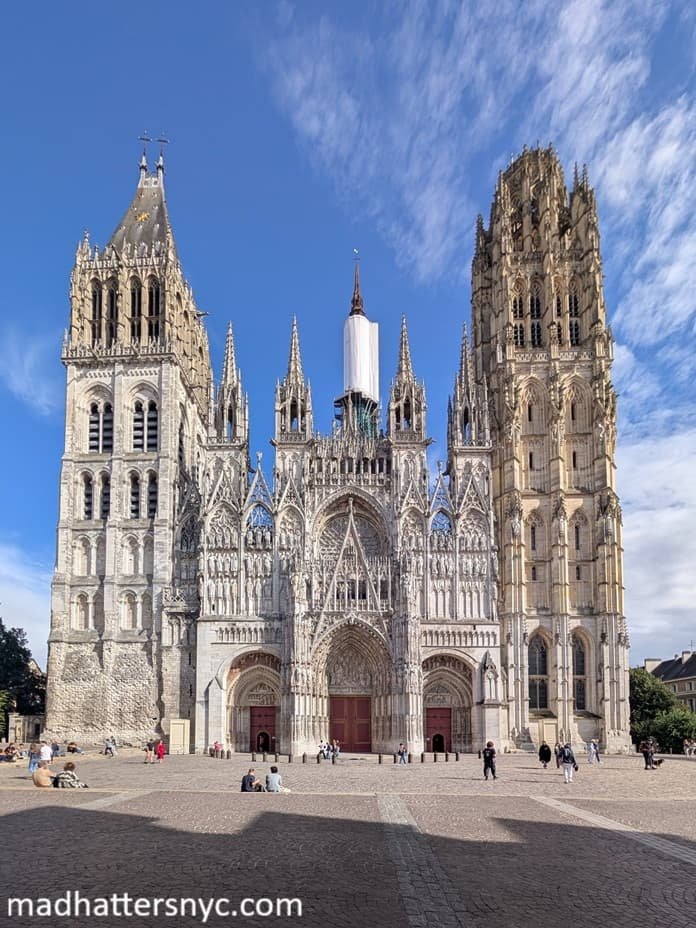
Rouen Cathedral
The capital of Normandy, perched along the Seine, is a city of soaring spires, cobbled streets, and a history that stretches back to the Middle Ages. Yet for the Impressionists, it was the ever-shifting light that made Rouen a masterpiece.
Monet first arrived here in the 1890s, captivated by the Rouen Cathedral, a towering Gothic marvel whose façade seemed to transform by the minute. From a rented room opposite the church, he set up multiple canvases, painting the same subject again and again as daylight shifted: at dawn, under gray skies, in full sun, at dusk. Between 1892 and 1894, he created more than 30 versions of the cathedral, each one an exploration of how color and atmosphere could alter perception. The result was his famous Cathedral Series, a triumph of persistence and vision that redefined landscape and architectural painting alike.
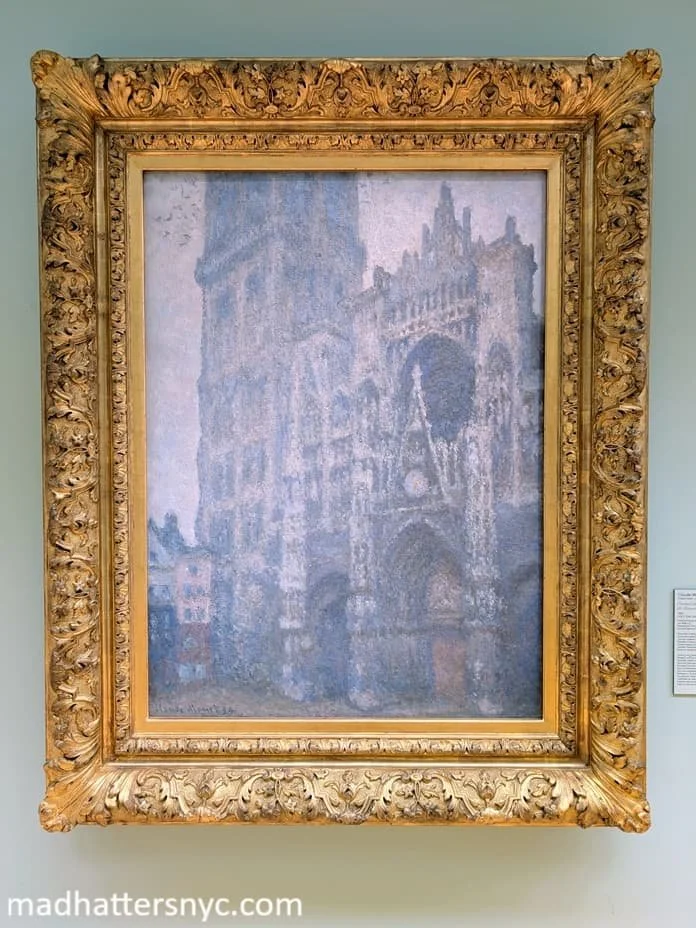
Portal of Rouen Cathedral, Gray Weather by Claude Monet at Musée des Beaux-Arts de Rouen
Today, you can stand where Monet once stood and watch the cathedral shift before your eyes. But to truly understand the roots of his vision, make time for the Musée des Beaux-Arts de Rouen. Housed in a stately 19th-century building just a short walk from the cathedral, this museum is one of the most important art collections in France outside Paris. For Monet fans, it offers a rare opportunity to trace the painter’s evolution. The museum holds one of Monet’s cathedral studies, but it also showcases the artists who paved his way like Alfred Sisley.
The Boat During the Flood at Port-Marly is one of six canvases Sisley painted depicting the flooding of the Seine in the spring of 1876. It was a groundbreaking moment: an Impressionist painter, seeking to analyze the infinite variations of light, created the first series of paintings centered on a single motif. Beyond Sisley and Monet, the museum’s collection includes works by Pissarro and Degas, as well as works from the Rouen School of post-impressionist artists based in Normandy.

Gros Horloge astronomical clock in Rouen
Rouen itself feels like an open-air museum. Half-timbered houses lean into narrow streets, and the Gros Horloge, a magnificent Renaissance clock arching over the main street, keeps time as it has for centuries. This is also where Joan of Arc was tried and executed, and her presence is honored at the modern Church of St. Joan of Arc in the Old Market Square. Take the time to step inside, where the stained glass windows are a sight to behold.
Travel Tips for Rouen
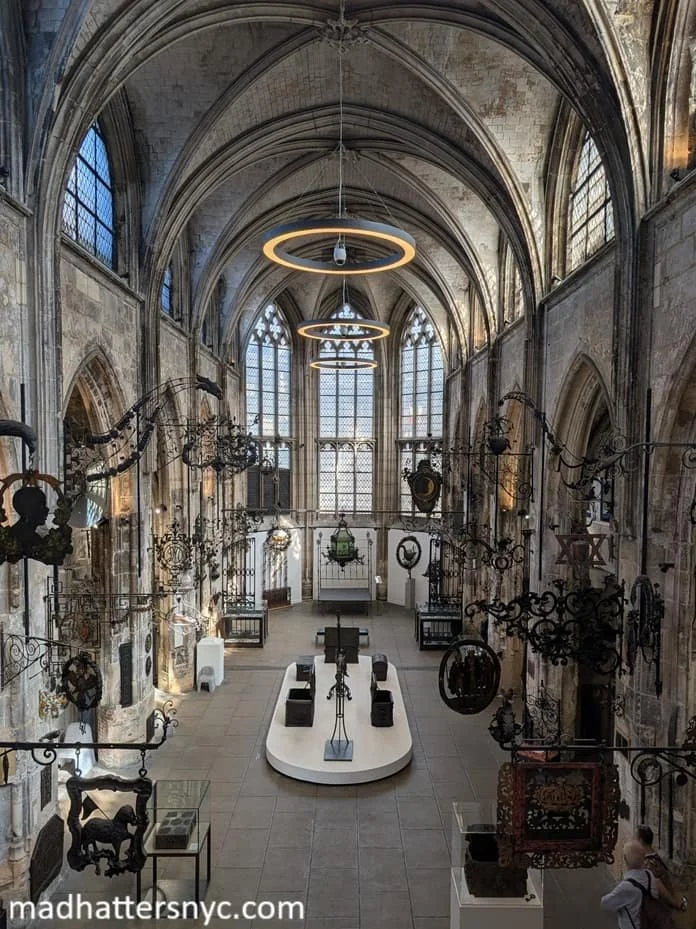
Secq des Tournelles Museum in Rouen
Rouen makes a great base for exploring northern Normandy, with plenty of centralized boutique hotels offering onsite parking.
Rouen’s museums are all free to visit; however, they are closed on Tuesdays. Besides the Musée des Beaux-Arts, I particularly enjoyed The Secq des Tournelles Museum, which houses one of the most significant collections of ancient wrought ironwork within the stunning Gothic Saint-Laurent Church, in itself a listed historic monument from the 15th and 16th centuries.
Rouen’s Tourism Office offers a self-guided audio tour that takes you to all the city’s attractions within 2-3 hours. You can also opt for the Joan of Arc tour, which follows in her footsteps.
Étretat: Cliffs, Sea and Sky
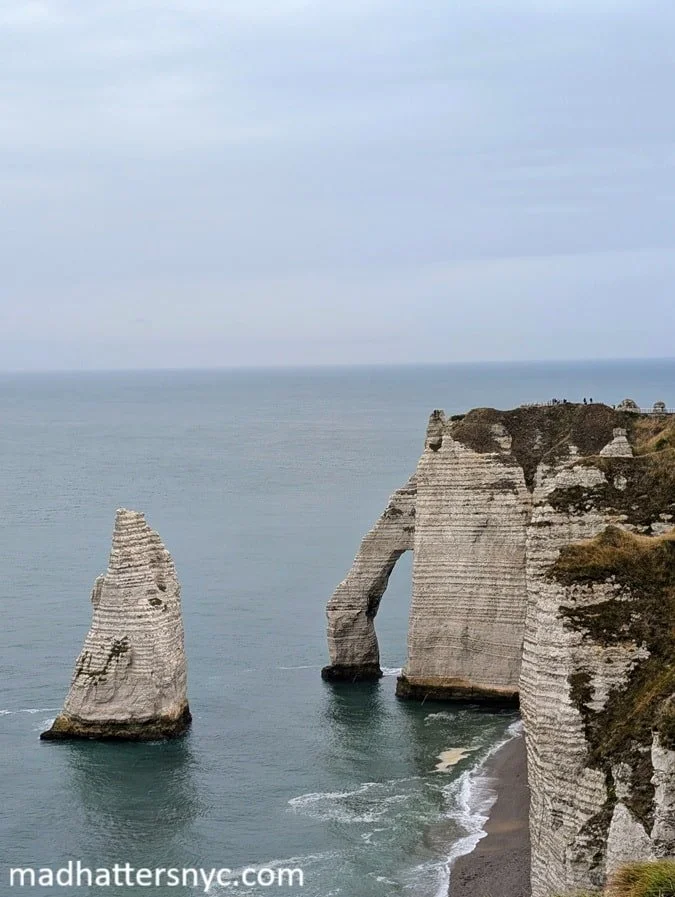
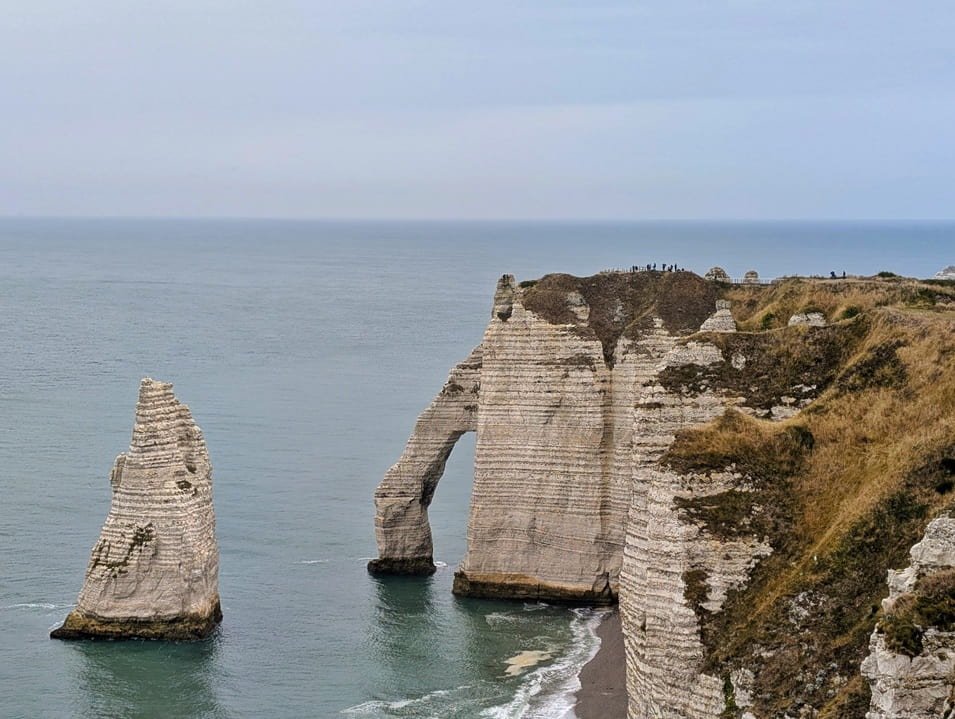
Porte d’Aval and the Aiguille in Étretat
If Giverny was Monet’s sanctuary and Rouen his experiment in light, then Étretat was his stage: a vast, natural amphitheater where sea, sky, and stone performed a never-ending play of color and movement. On the windswept coast of Normandy, about three hours from Paris, this former fishing village sits against some of France’s most spectacular scenery: towering chalk cliffs that plunge dramatically into the Channel below.
The cliffs of Étretat are not merely scenic, they’re sculptural masterpieces carved by the elements. The cliffs themselves are part of a larger geological formation that extends for over 80 miles. Their stark whiteness comes from compacted marine organisms deposited over 70 million years ago. Over time, the sea’s relentless rhythm has shaped their soft white chalk into arches, pillars, and curves so precise they look almost man-made. The most famous of these are the Porte d’Aval, an immense natural arch that stretches gracefully over the water, and the Aiguille, a 70-meter limestone needle that rises beside it like a Gothic spire. From the opposite end of the bay, the Porte d’Amont arches toward the sea, forming a delicate balance between strength and fragility, which is a motif Monet loved to explore in paint.
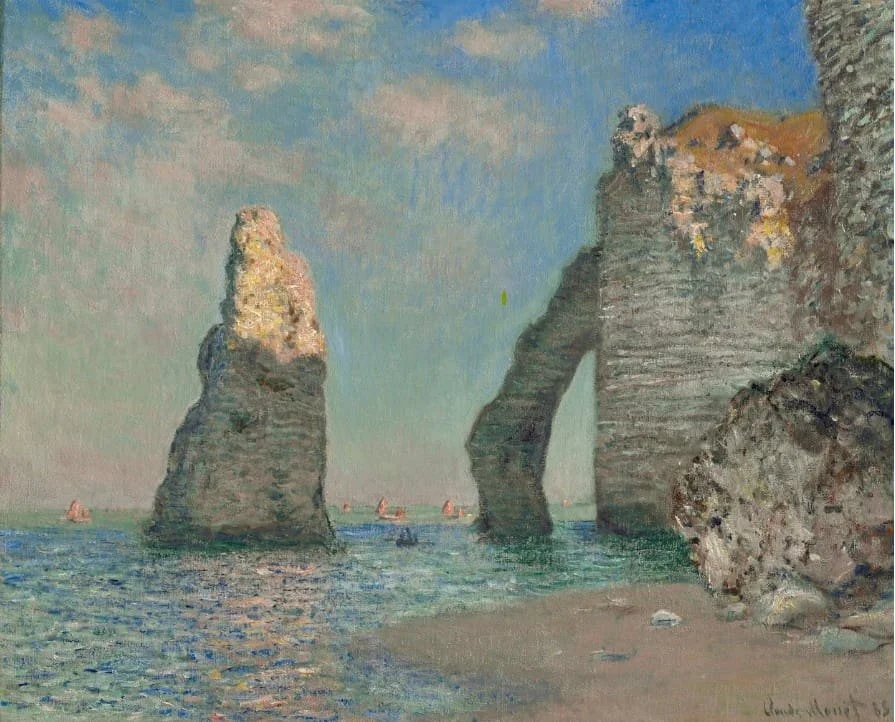
The Cliffs at Étretat by Claude Monet
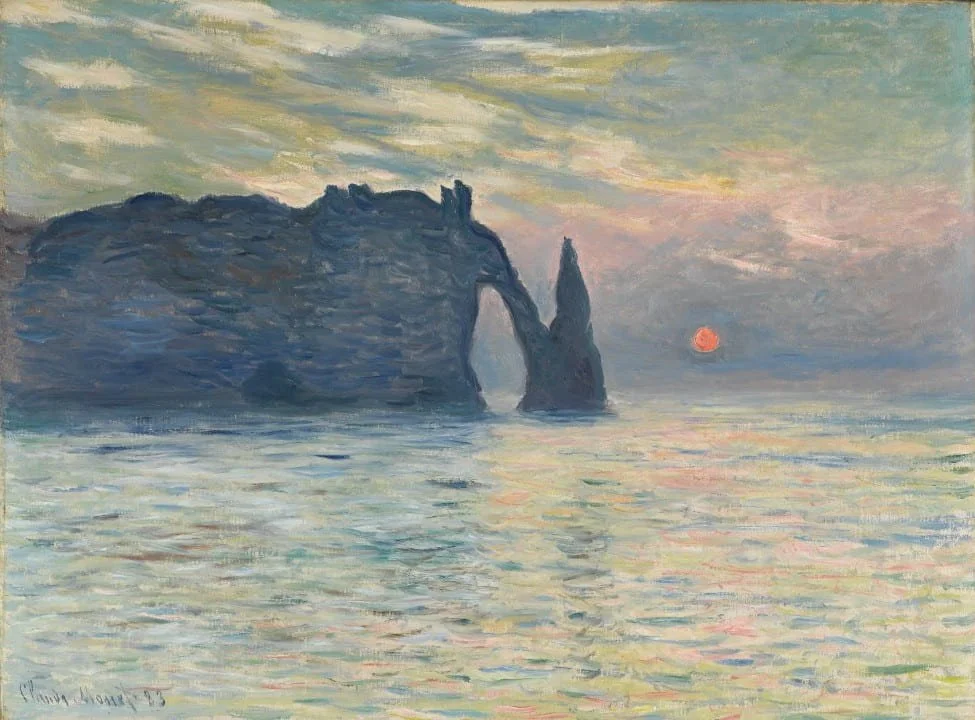
The Cliff, Étretat, Sunset by Claude Monet
Monet first arrived here in the 1860s, returning often over the following decades, each time chasing a different mood of the cliffs. In his Cliffs at Étretat series, now scattered across museums worldwide, he transformed their solid mass into living, breathing entities. He painted them at dawn, in the gold of sunset, and under stormy skies, when the sea seemed to merge with the clouds. For Monet, Étretat wasn’t just a subject, it was an obsession, a meditation on how nature’s forms shift under the weight of light and weather. As you stroll along Étretat’s boardwalk, signs point out the exact viewpoints of such masterpieces as Bateaux de Pêche, Étretat (1885), so you can picture Monet with his easel where you stand.
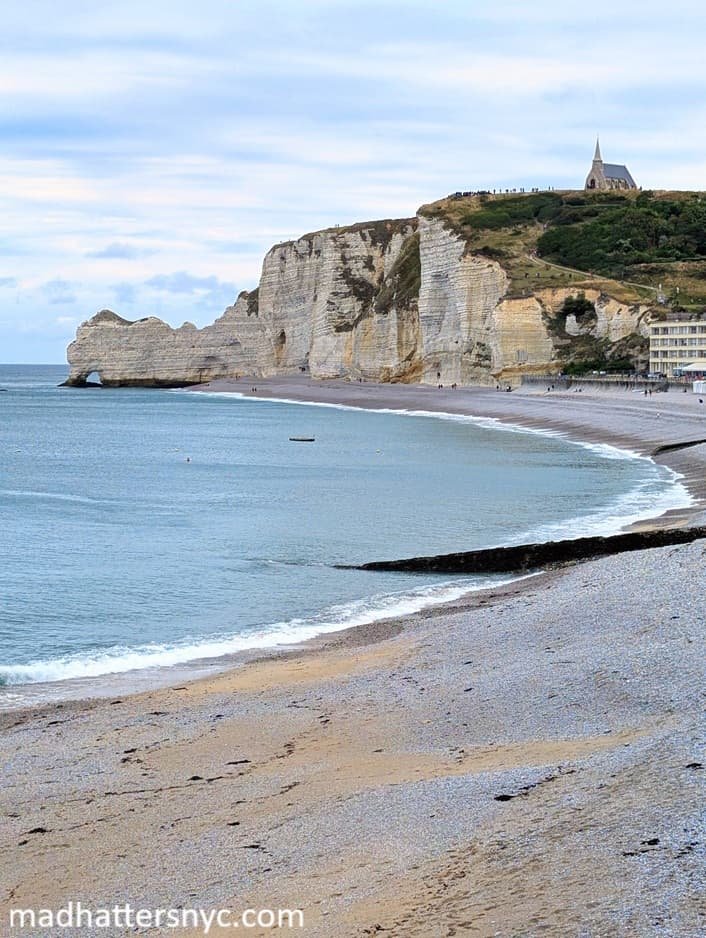
If you take the Falaise d’Amont trail, which climbs above the beach toward the Chapel of Notre-Dame de la Garde, the landscape unfurls like a painting in real time. Looking west, you can see the exact vantage point where Monet painted The Cliff, Étretat, Sunset (1883). On the opposite headland, the Falaise d’Aval offers a panoramic view of the Porte d’Aval and Aiguille, with paths that continue toward Yport and Fécamp for those who want to walk further along Normandy’s Alabaster Coast.
Back in town, Étretat offers charming seaside vibes. Normandy is known for cider, camembert, and seafood. Try moules marinières or a galette with local apple cider. If you have more time to spare, the Musée du Clos Lupin (formerly the home of novelist Maurice Leblanc) includes displays on Étretat’s cultural heritage. Just above the cliffs, Jardins d’Étretat is a newer attraction created on the site of a 1903 garden once visited by Monet. The sculptural park blends topiary art, landscape design, and contemporary sculpture to reinterpret the natural drama of the coast.
Travel Tips for Étretat
Parking near the beach can be limited; so arrive early if driving. Arriving early also has the added benefit of beating the throngs of tourists arriving by public transportation. Unlike Giverny and Rouen, Étretat cannot be accessed directly by train, so most will arrive by bus from Paris, or nearby Le Havre and Fecamp starting around 10:00 am.
Pay attention to the signage since many areas are at risk of falling rocks or off-limits entirely. Stay on marked paths along the cliffs. Also move with caution since surfaces can be slippery, especially after rain.
Driving Tips for Your Road Trip Through France
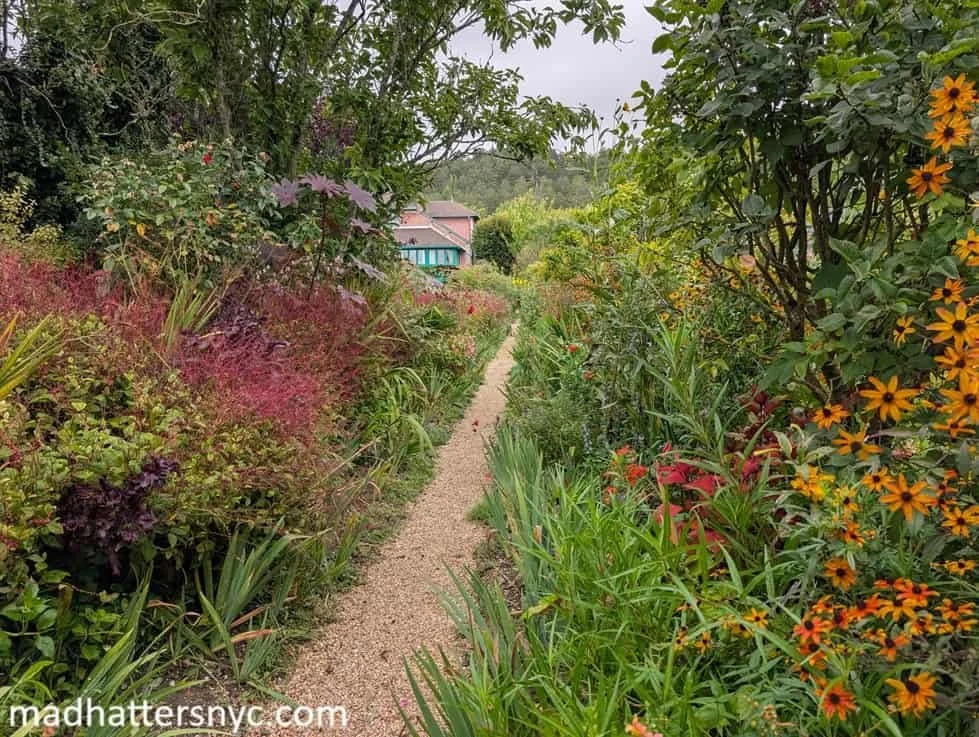
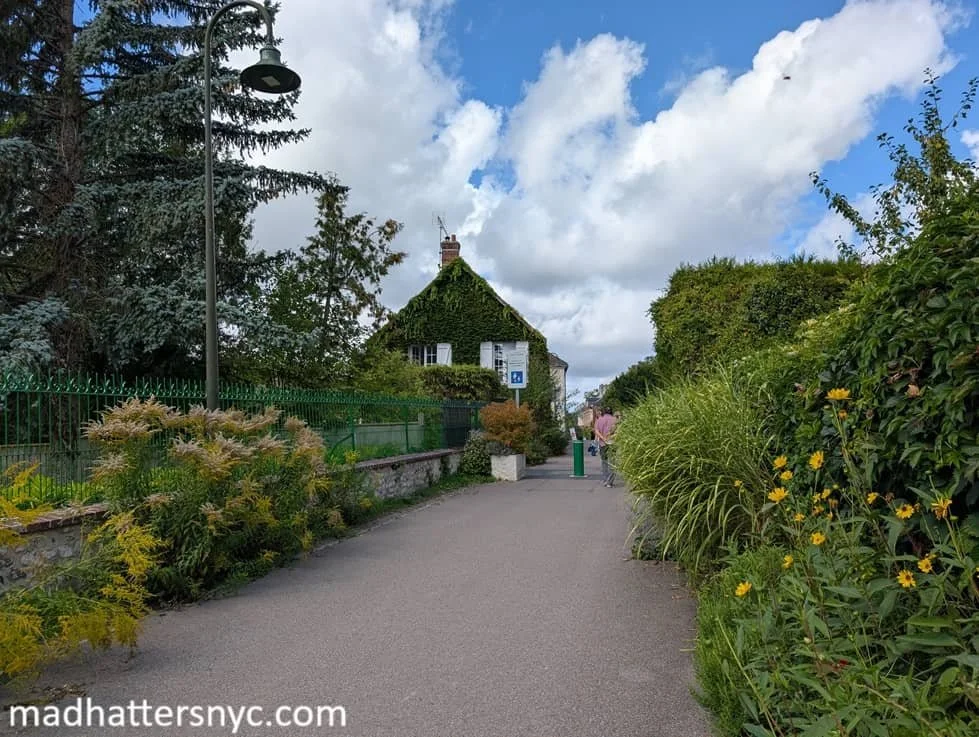
Driving through France, especially from Paris to Normandy, is one of the most rewarding ways to explore the country’s Impressionist heritage. The routes are scenic, the roads well-maintained, and small detours often lead to charming villages or river views that tour buses miss entirely. Still, a few local quirks and rules are worth knowing before you hit the road.
Renting a Car
Since I prefer to keep city driving to a minimum when I’m in a foreign country, I picked up and returned my car from Paris Charles de Gaulle airport, where all major rental companies (Europcar, Hertz, Sixt, Avis) conveniently have kiosks in the parking garage. Automatic cars are available but limited; book early if you prefer one. You’ll need a valid driver’s license and a credit card for the deposit. I wasn’t asked for an International Driving Permit, though this might be a good precaution if you’re renting from a smaller location.
Toll Roads
From central Paris, it’s about 1 hour to Giverny, 1.5 hours more to Rouen, and another 1.5-2 hours to Étretat. Driving in Normandy is straightforward. Most major highways are toll roads and you can expect to pay about €15–20 between Paris and Étretat. Both cash and card are accepted. For a more leisurely route, follow D-roads (departmental roads) which may be slower but are more scenic. In small towns, pay attention to yield or stop signs since some roads may have one-way sections or sudden speed limit drops. If you’re unsure of right-of-way rules, default to giving vehicles coming from the right priority.
Fueling Up
Fuel stations are abundant, though in rural areas some may close at night or on Sundays. Confirm the gasoline type your rental car requires with the agent before you leave. If you’re planning to refuel the car prior to returning it, I like to use the “Find along route” option in Google Maps to locate a fuel station close to the dropoff location. There isn’t a pay-at-the-pump option; you’re required to prepay in the station. If you’re not sure how much you need to fill the tank, err on the side of caution and they will refund the difference.
Conclusion
An Impressionist road trip from Paris is more than a journey through northern France tracing Monet’s footsteps, it’s an invitation to see the world as he and his contemporaries once did: with curiosity and appreciation of nature’s shifting moods. Whether you’re behind the wheel or standing before Étretat’s cliffs, the journey reminds you that beauty is always in motion, and that the art of travel, like Impressionism itself, lies in catching life’s most fleeting light.