Top 10 Things to See from Ghent’s Hop On Hop Off Water Tram
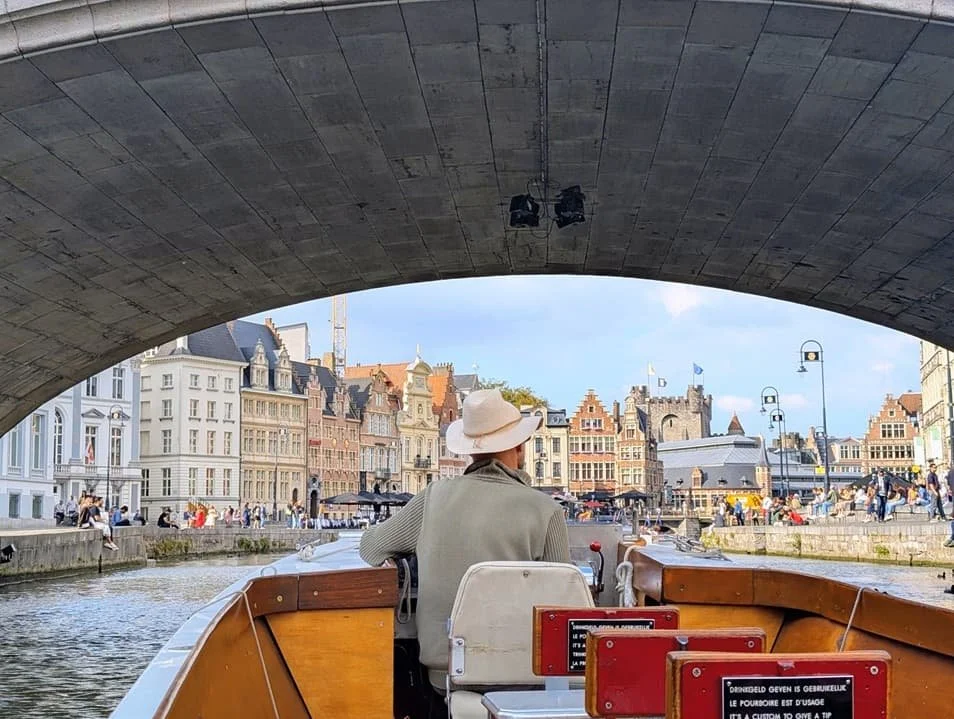
Ghent‘s story begins with the confluence of the Leie and the Scheldt rivers, and centuries of trade have left a network of canals that still thread through the medieval heart of town. Walking the cobbled lanes gives you one perspective, but to truly get a feel for this medieval city, you need to glide along the water itself. Whether you’re chasing postcard views, tracking down street art, or simply savoring the quiet rhythm of the river, the Hop On Hop Off Water Tram delivers. Here’s a list of my favorite things to see from Ghent’s Hop On Hop Off Water Tram that prove that some of the city’s most memorable angles are best experienced from the water.
1. Guild Houses along Graslei and Korenlei
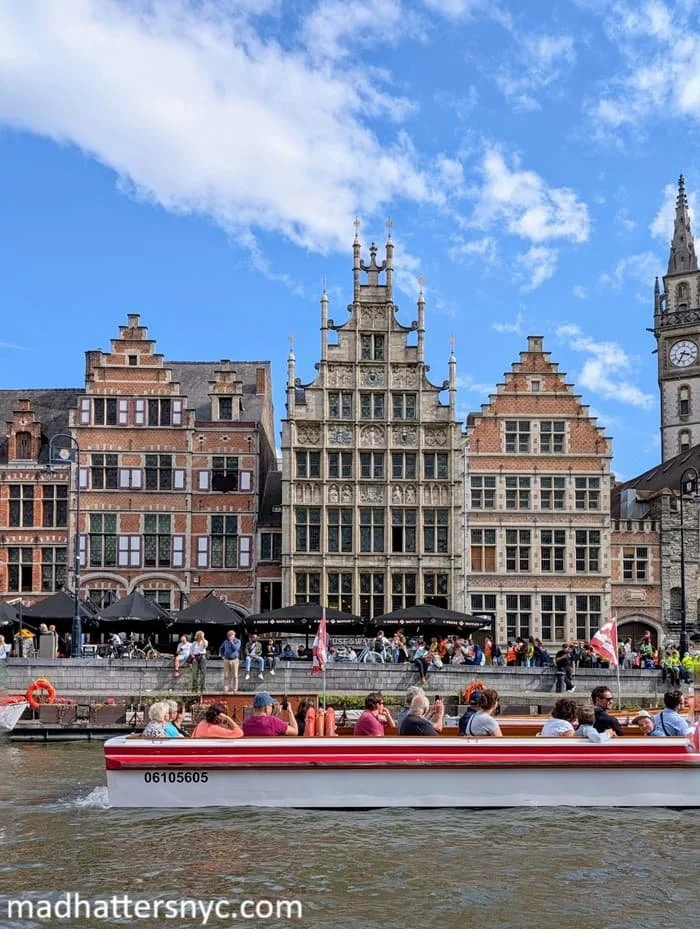
Graslei, or “Grass Quay”, and Korenlei, or “Wheat Quay”, are two parallel quays that were once the beating heart of Ghent’s grain trade. Today, the picturesque view here is what most visitors will conjure fondly when they think of Ghent. Their elegant guild houses, built between the 12th and 17th centuries, still tell stories of merchant wealth and civic pride. Standing shoulder to shoulder along the Leie, each facade served as both a warehouse and a status symbol for the guilds that financed the city’s prosperity.
As our boat glides past, I can almost imagine the scene five hundred years ago: the air thick with the scent of malt and fresh bread while merchants shouted deals across the water and apprentices scurried up the narrow quayside steps. The stepped gables, crow-stepped roofs, and carved reliefs were all symbols of a guild’s power when trade made Ghent one of Europe’s richest cities. My favorite is the former Grain Weigh House, whose soaring front once guaranteed that every shipment was measured to the last kernel.
2. A Poem on the Canal Walls
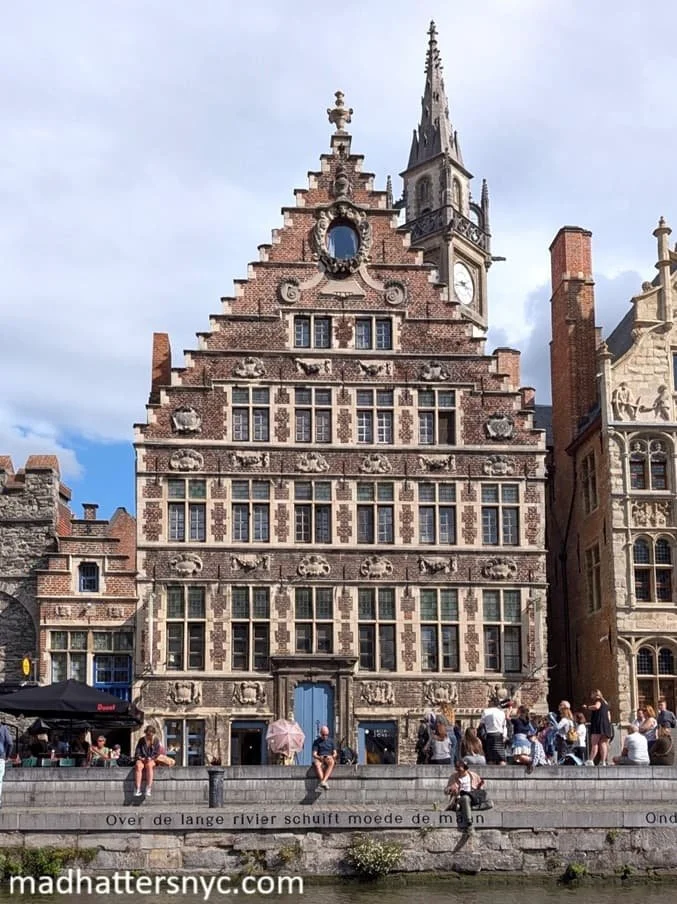
As we move along the River Leie, you may notice a delicate ribbon of words stretching across the canal walls. These are a painted excerpt from Melopee, a 1920s poem by the celebrated Flemish modernist Paul van Ostaijen. The featured lines are:
Onder de maan schuift de lange rivier/Under the moon the long river slides
Over de lange rivier schuift moede de maan/Beneath the long river slides the moon
Onder de maan op de lange rivier schuift de kano naar zee/Under the moon on the long river slides the canoe to the sea
Ghent has long embraced poetry in public spaces, and this installation is a shining example of that tradition. In 1999, twins Lucien and Oscar Cornelis, who were sign painters by profession, added three lines of the poem along the canal as one stop in a city-wide poetry walk. Over time, the lettering faded, and in 2022, the city restored it, ensuring that the words continue to grace the river for visitors and locals alike.
I love how the verses reveal themselves slowly, fragment by fragment. It’s a fleeting encounter — you may not catch the entire poem in one pass — but that’s part of its charm. Like Ghent itself, the mural invites you to look closer, to linger, and to let art and cityscape blur together in a single, lyrical moment.
3. Van Eyck-Themed Murals
One of my favorite surprises from the Ghent Water Tram is spotting Van Eyck-inspired murals, which encapsulate the city’s ability to keep centuries-old masterpieces alive in unexpected ways. Unlike the centuries-old guild houses, these murals are fresh, bold, and playful, yet they draw a direct line to Ghent’s most treasured treasure: the Ghent Altarpiece, or Mystic Lamb.
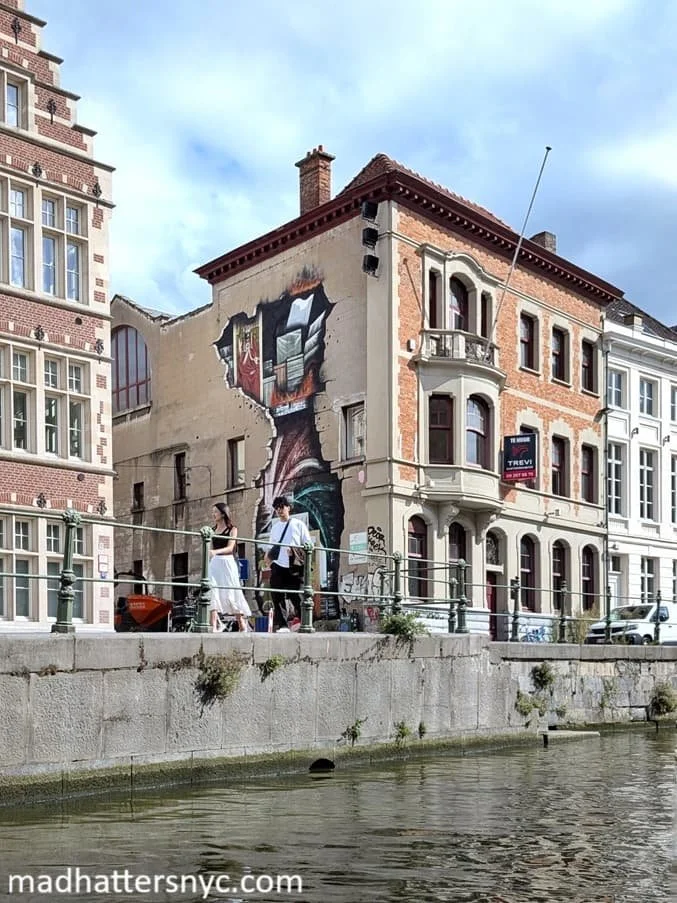
The first mural, which you can also see from St. Michael’s Bridge, is the Monuments Men mural by Bart Smeets, commissioned after the release of the 2014 movie. From the water tram, you can admire how it references the recovery of stolen art while paying homage to Van Eyck’s masterpiece. The juxtaposition of contemporary street art with centuries-old architecture creates a dynamic dialogue between past and present that is uniquely Ghent.
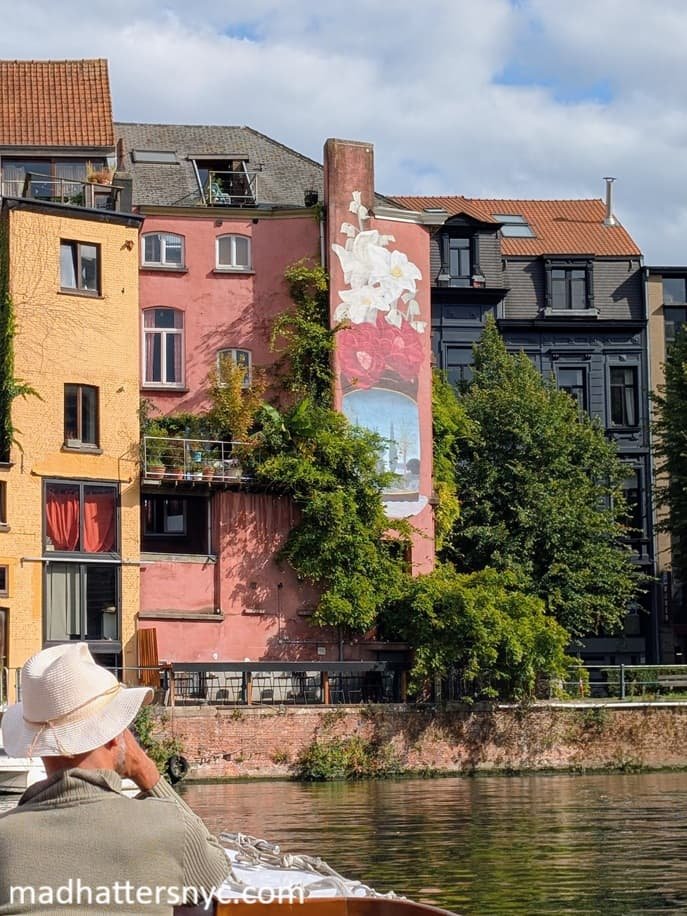
Near De Krook, there is the stunning Pilgrims Pot by Pastel, a playful reinterpretation of the flowers on Mary’s crown and the Pilgrims panel from the Altarpiece. The work, which takes up almost the full height of the building, is best appreciated from a distance. From the water, the colorful blossoms seem almost to sway with the ripples, and it’s fascinating to see the Argentine artist mash up different pieces of the masterpiece in a modern way.
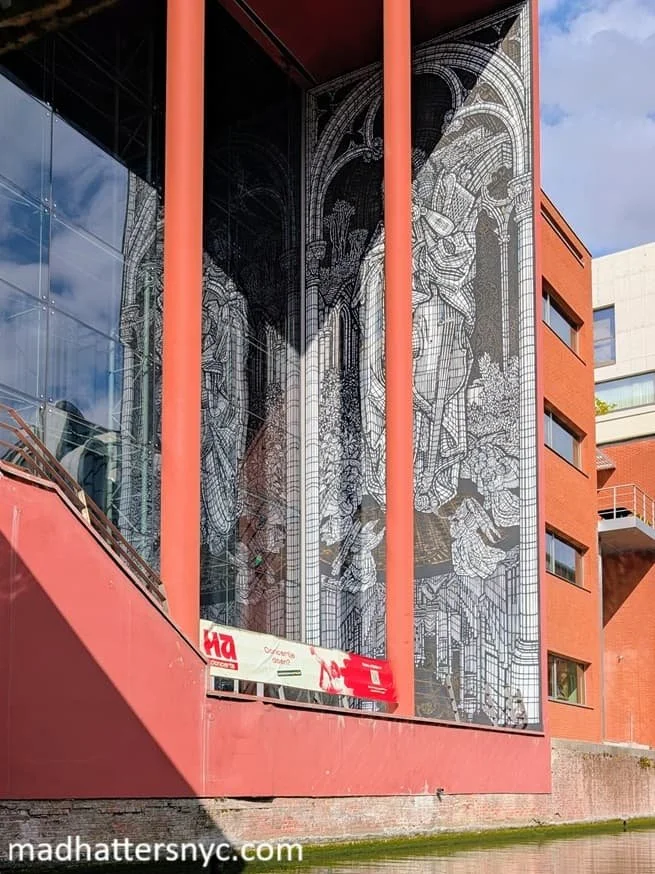
At the Handelsbeurs, the French duo Monkey Bird Crew’s La Sonate du Canal ties the Ghent Altarpiece to music. The mural references musical instruments of Van Eyck’s era, visually linking sound and sight. Yet again, floating past, you get a sense of scale and context that’s impossible to replicate on foot. The mural interacts with the historic Handelsbeurs Concert Hall, creating a perfect harmony of old and new. Another bonus: if you complete the Hop On Hop Off water tram circuit like I did, you’ll get to enjoy the mural from opposite directions so you can enjoy each panel fully.
4. Diving Figurines by Ronald Cameron
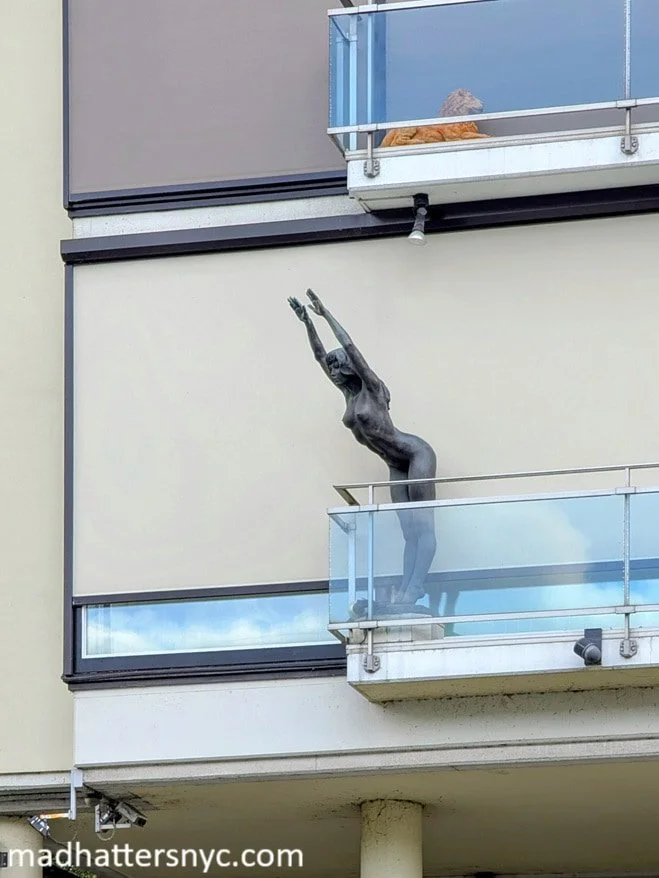
A playful highlight that made me smile from the Water Tram were Ronald Cameron’s Diving Figurines. These small bronze sculptures appear to leap confidently into the canal; the woman from a balcony, and the man from a roof on the opposite side. The sculptures, which were apparently acquired by a local collector, offer a whimsical touch to the ride. Ronald Cameron (1930–2013) was a British-born sculptor renowned for his masterful portrayals of usually life-sized nude female figures, capturing the spirit of young, liberating women in a modern style.
5. Blown Away Sculptures by Penny Hardy
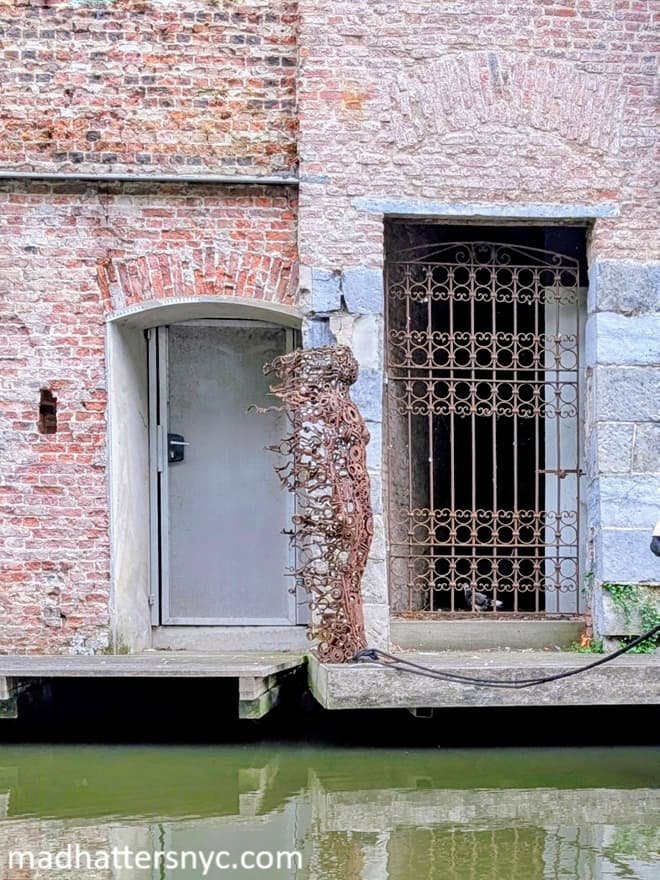
Another striking sight on the canal ride are the two Blown Away sculptures by British artist Penny Hardy. They come from her series of dynamic, wind-swept figures, which she described as “a response to the strong emotions that affect us all at key points in our lives, the physical impact they have on our bodies and the influence external or environmental forces have on all of us.” Hardy, a British sculptor celebrated for her fluid, expressive forms, often captures the interplay between movement, air, and human presence in her work. From the water tram, the sculptures almost appear alive, shifting subtly with the light and reflections in the canal below.
Floating past, it’s impossible not to pause and admire the way the city integrates modern art into its historic fabric. Hardy’s sculptures make Ghent feel like a living museum where creativity thrives, and often in unexpected forms.
6. Former Teahouse Balconies
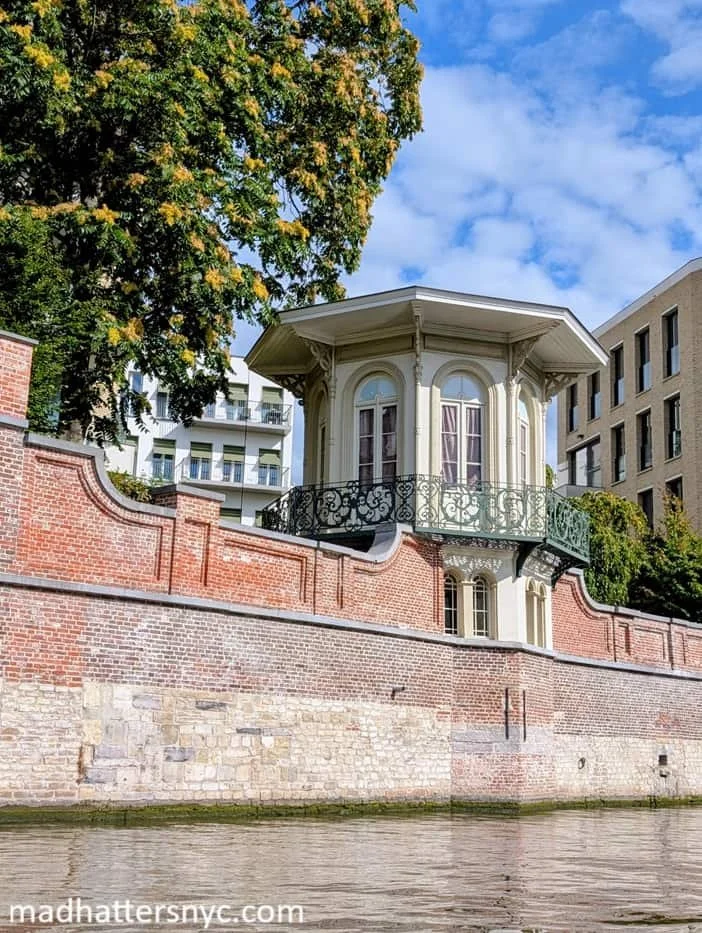
As the Hop On Hop Off water tram drifts past the canal side of Nederkouter and Tiebaertsteeg, keep a lookout. Here, tucked between more conventional 19th-century townhouses, a series of ornate ironwork balconies mark the remnants of Ghent’s former teahouses, which were once fashionable gathering places for the city’s well-to-do. Their filigreed railings and delicate curves feel like a whisper from another era, when leisurely afternoons of tea and conversation unfolded above the bustling quays.
Today, some of the buildings have been converted into apartments or cafés, but the balconies remain a reminder of a gentler, more decorative age. From the water, the vantage point is perfect: the balconies appear like elegant stages, their intricate scrollwork drawing the eye.
7. De Krook
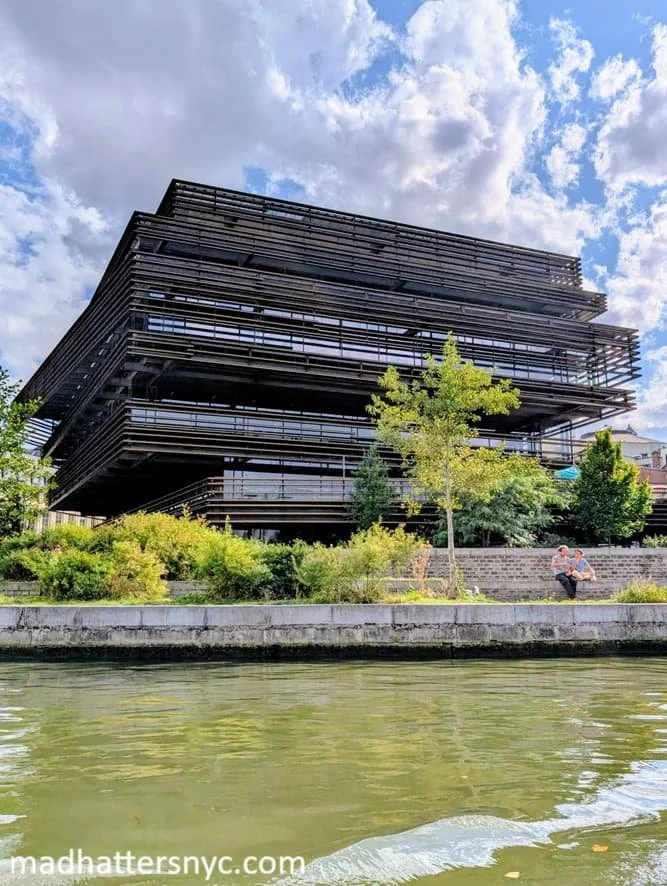
As you approach the bend near Kuiperskaai, the sleek silhouette of De Krook comes into view, as striking a departure from the stepped gables and medieval towers as you can imagine. The building’s bold geometry and sweeping terraces feel futuristic, a sharp counterpoint to the city’s centuries-old brick and stone.
Opened in 2017, De Krook is Ghent’s state-of-the-art city library and innovation center, designed by the acclaimed firms Coussée & Goris Architects and RCR Arquitectes. The building’s modern design was meant to evoke the image of a pile of books. Its name, derived from an old Flemish word for “bend,” references both the canal’s curve and the city’s forward-thinking spirit. Inside, it houses not only books, but collaborative workspaces, tech labs, and cultural programs, embodying Ghent’s commitment to knowledge and community.
8. De Therminal Building at Ghent University
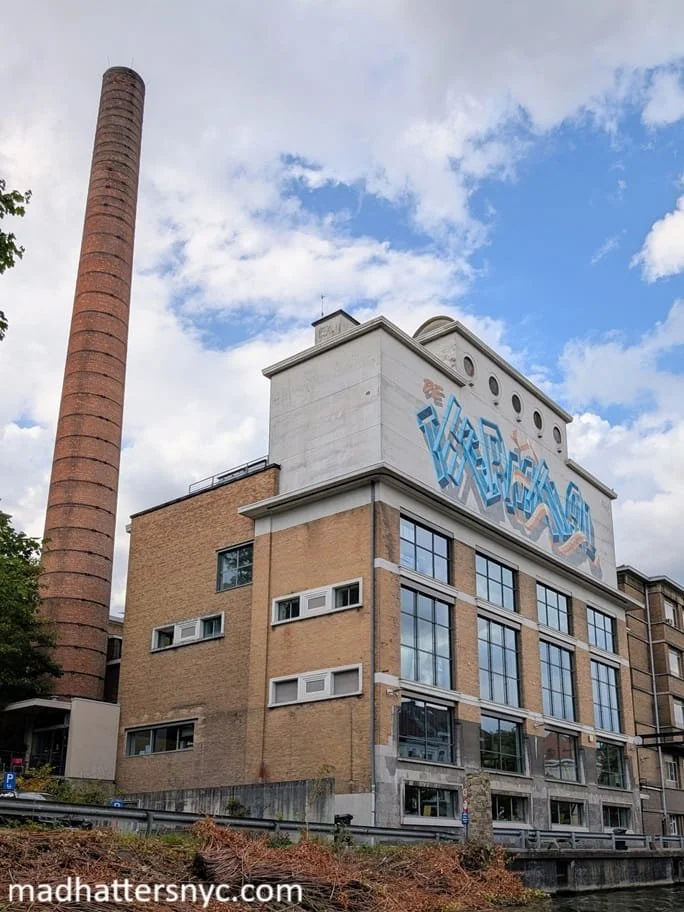
Nestled along the canal and surrounded by greenery, De Therminal offers a unique glimpse into Ghent’s layered history. Today, it serves as a lively student house for Ghent University, but the building wasn’t always a hub of youthful energy. Originally part of the university’s thermal power plant, coal was once delivered to the quayside, burned, and converted into steam that heated nearby university buildings. The tall brick chimney still hints at this industrial past, a striking reminder of the building’s original purpose.
In 2006, after a careful and prestigious renovation of the old “coal shed,” De Therminal reopened as a student house. From the Hop On Hop Off boat, the juxtaposition of its industrial look with the colorful street art on its riverside facade is captivating. The hiss of steam and the activity of workers long gone, now replaced by study groups and late-night debates.
9. De Vooruit Building
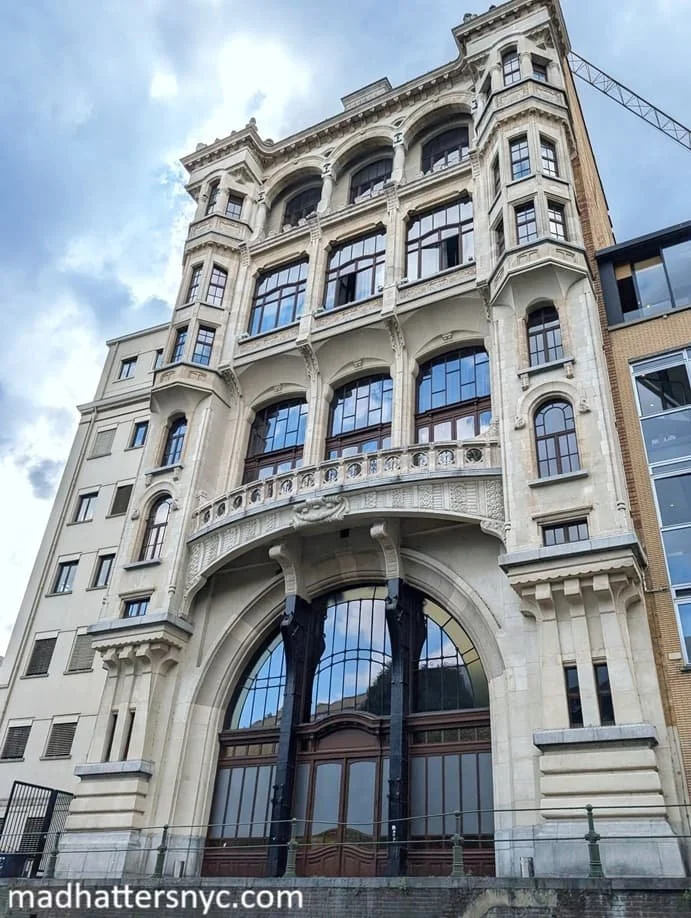
As the Hop On Hop Off boat approaches the bustling heart of Ghent, the unmistakable silhouette of De Vooruit rises above the canal, a grand, eclectic building that immediately commands attention. From the boat, its ornate facade seems to tower above you as you float by.
Built entirely in 1913 against the backdrop of the rise of socialism, De Vooruit was designed as a socialist cooperative and quickly became one of the most important monuments in Ghent, and perhaps in all of Flanders. Its mix of Art Nouveau elegance and eclectic detailing celebrated progress and solidarity, offering workers a place for concerts, theater, and social gatherings. The building’s name Vooruit, meaning “forward”, still carries that spirit of optimism.
Over the decades, De Vooruit experienced cycles of glory and decline, undergoing multiple renovations to preserve its historic character while adapting to new uses. Today it continues as a vibrant cultural hub, but the story of renewal isn’t over. The building entered another major restoration phase scheduled to last through December 2025, ensuring that its intricate stonework, curved windows, and iconic façade will keep inspiring future generations. De Vooruit has even been submitted for UNESCO World Heritage status, a recognition that would cement its role as one of Europe’s great cultural landmarks.
10. Tunnels Under F. Laurentplein
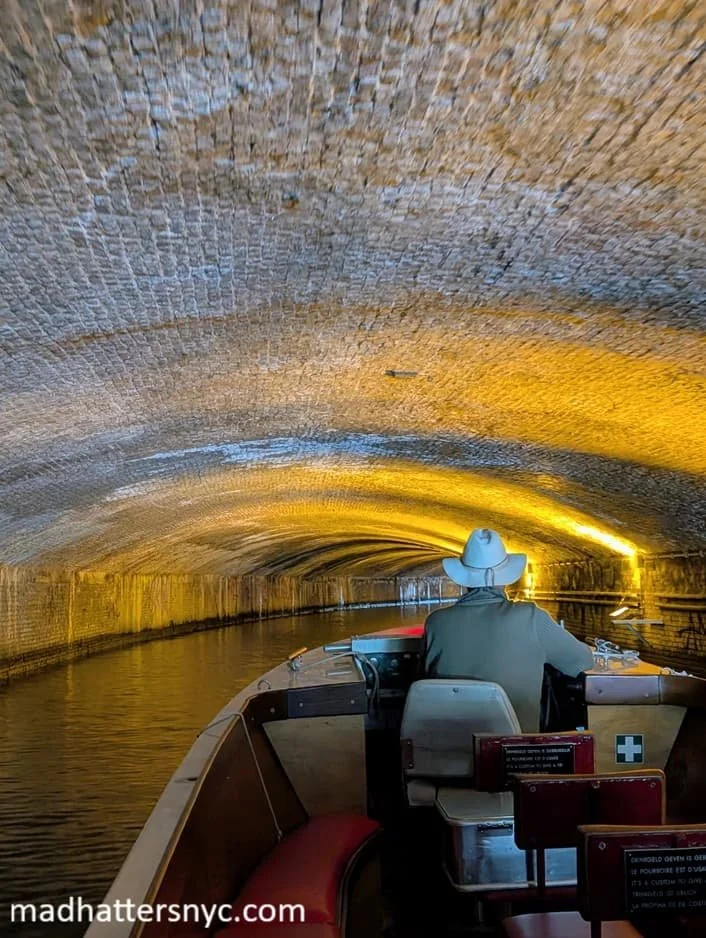
One of the more atmospheric experiences on the canal tour is gliding beneath the tunnel under Laurentplein. These passages were once integral to Ghent’s trade, allowing goods to move discreetly between warehouses and quays without disrupting the busy streets above. From the water, the arches feel almost cinematic, a hidden layer of the city revealed only to those who navigate its canals. In 2020, Ghent even used the tunnel as an exhibition space during its citywide Van Eyck celebration.
Practical Tips for Riding the Hop On Hop Off Water Tram
Riding Ghent’s Hop On Hop Off Water Tram is one of the easiest and most enjoyable ways to see the city from a fresh perspective. Here are some tips to make the most of your experience:
Ticket Options and Boarding
Ghent’s Hop On Hop Off Water Tram is included with CityCard Gent, so all I had to do was get to the stop 5 minutes before the tram was scheduled to leave. If you don’t have a CityCard, you can stop by the kiosk opposite Gravensteen Castle to purchase tickets or go through an online ticketing outlet like GetYourGuide. Tickets are flexible, allowing you to hop on or off at multiple stops along the canal route. If you’re short on time, a single loop provides a scenic overview, but the full day ticket allows you to linger at the stops that appeal most to you and jump back on.
Schedule
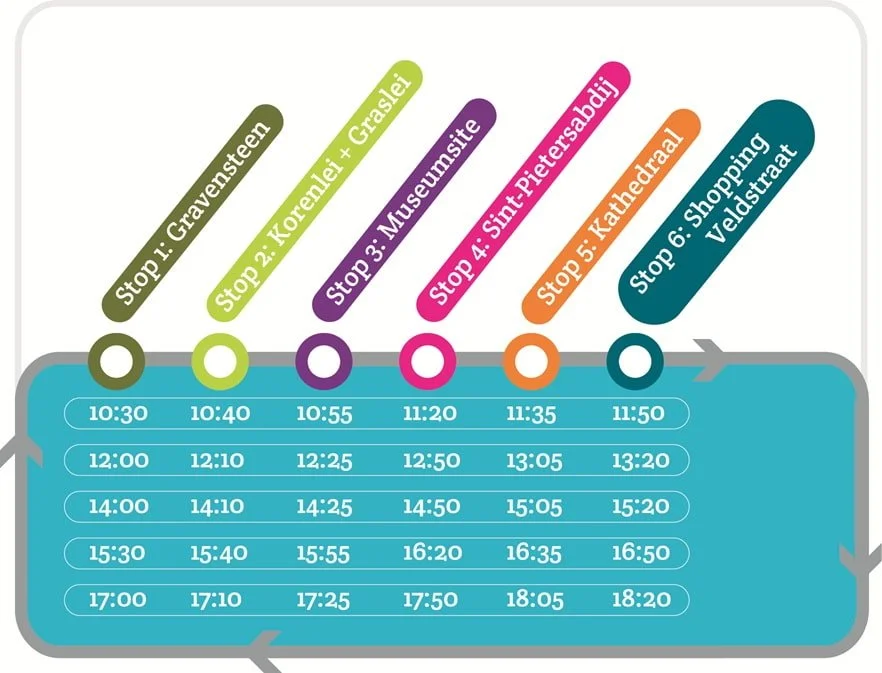
I really appreciated that the route keeps to a reliable schedule. Each stop is only 5 minutes long to allow current passengers to disembark, or to allow returning and new passengers to alight. I left the Gravensteen stop at 3:00 pm and returned back there after completing the full circuit at 4:55 pm.
Weather and Comfort
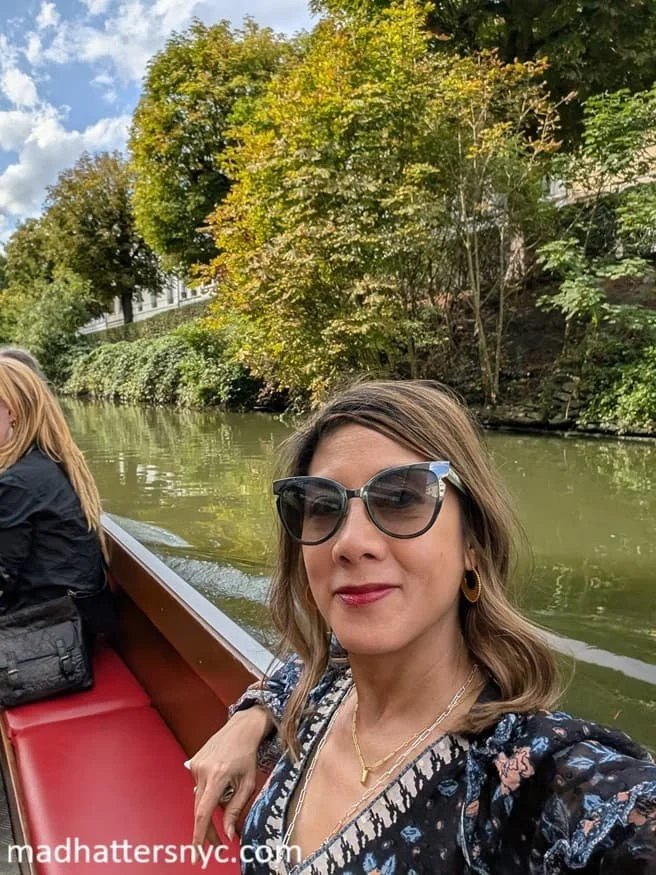
The Hop On Hop Off Water Tram is an open top boat, so dress for the weather. A light jacket can make the ride more comfortable on windy days. If it rains, umbrellas are available for loan on board. Seating is limited, so arriving early helps secure a good spot, especially near the bow for unobstructed views.
Tipping
Although tipping culture isn’t commonplace in Europe, there are clear signs indicating that on this occasion, tipping your guide is customary.
Conclusion
Seeing Ghent from the Hop On Hop Off Water Tram is more than just a sightseeing experience, it’s a journey through the city’s past and present. Gliding along the canals, you witness Ghent’s layered history, vibrant culture, and playful creativity, all reflected in the water around you. For anyone seeking to truly understand and feel Ghent, experiencing it from the water is simply essential.