My Ghent 2-Day Itinerary: Castles, Canals and Amazing Art
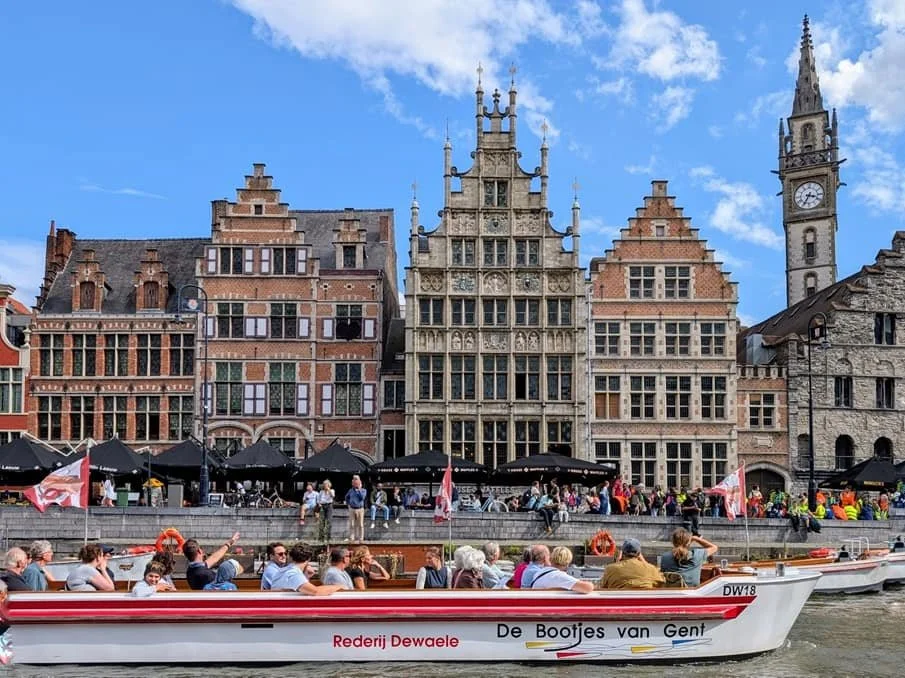
Belgium’s medieval cities are full of charm, but few places balance old-world beauty and youthful energy quite like Ghent. While nearby Bruges often steals the spotlight, Ghent rewards travelers with a more authentic and lively experience. With its soaring Gothic towers, romantic canals, and cobblestone lanes lined with bustling cafés, it feels at once historic and refreshingly modern. Spend just 2 days in Ghent and you’ll uncover a destination where 12th-century castles stand beside vibrant street art. Follow this carefully planned 2-day Ghent itinerary to experience the city’s most celebrated landmarks and hidden corners.
Day 1: Medieval Marvels and Canalside Charm
Morning: Castles and Storybook Views
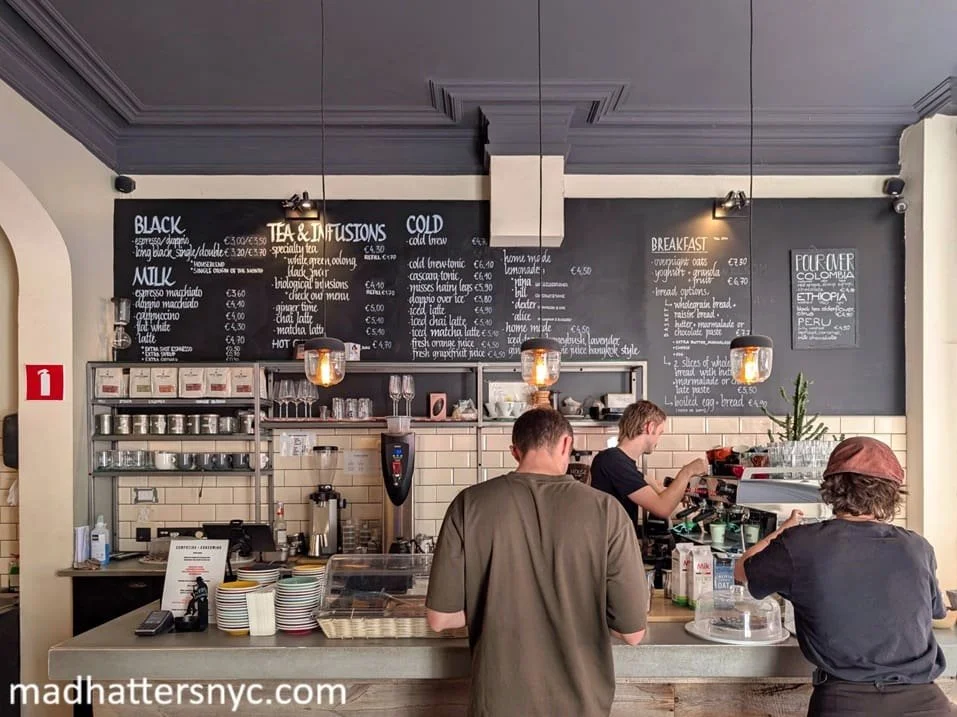
Take Five Espressobar
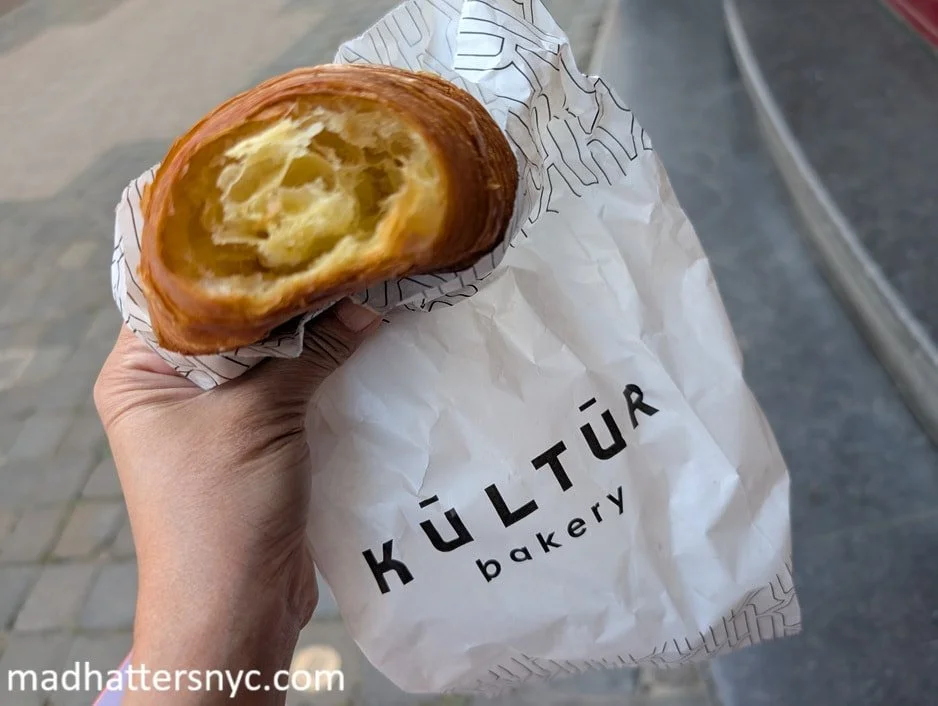
Fluffy croissant from Kultur Bakery
If, like me, you need to kickstart your day with a delicious cup of coffee, then make your way to Take Five Espressobar, a specialty coffee shop with a relaxed vibe. The Voldersstraat location is very conveniently located next to the tempting Kultur Bakery, where a host of baked delights await.
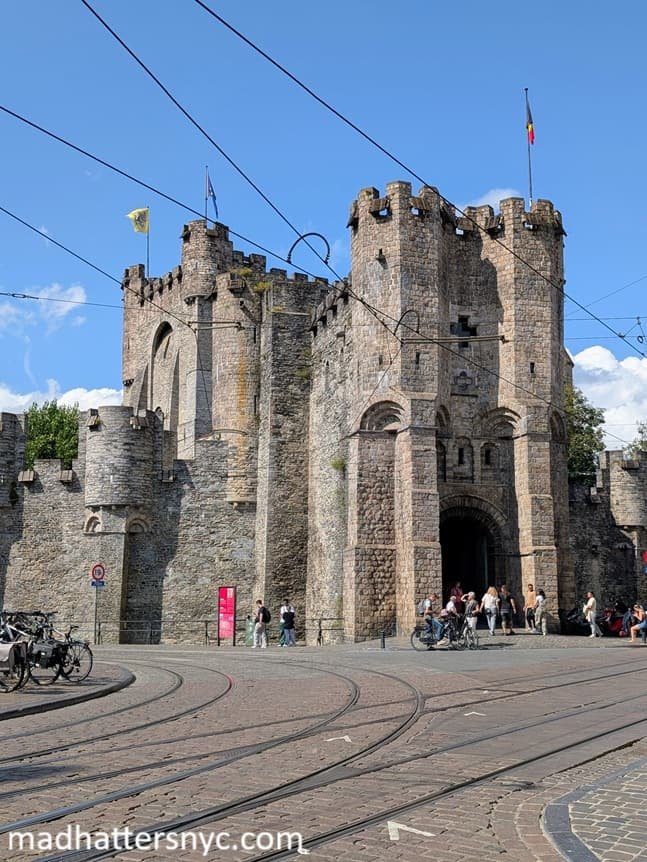
Gravensteen Castle exterior
Then you’re truly ready to commence your first day in Ghent with a step back in time at Gravensteen, the imposing 12th-century Castle of the Counts. Arrive soon after opening to enjoy the ramparts before tour groups arrive. I’ve been to other castles, but my time at Gravensteen was truly memorable. Though the thick stone walls, crenelated towers, and rooftop walkway are more than enough to warrant a visit, the experience is unique thanks to the brilliant Historische Huizen Gent, which runs seven of Ghent’s historic houses.
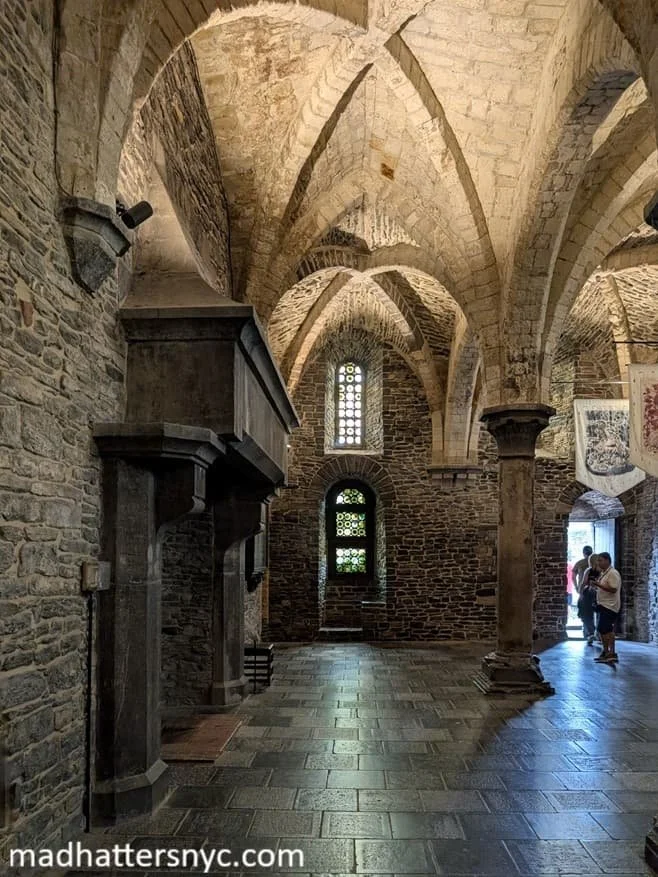
Gravensteen Castle interior
The price of admission includes an audio guided tour. In an effort to make the castle more approachable, the castle offers two versions: the Comedy Tour with Flemish comedian Wouter Deprez, or the Big Five Tour, which is described as “a speed date with some of the castle’s notorious inhabitants”. I chose the Comedy Tour, which had me enthralled. Charming illustrations throughout the castle and Deprez’s humorous storytelling brought empty rooms to life and made 90 minutes simply zoom by. I was almost tempted to go back and try the other tour! So don’t shortchange yourself; make sure you allow enough time to enjoy it fully.
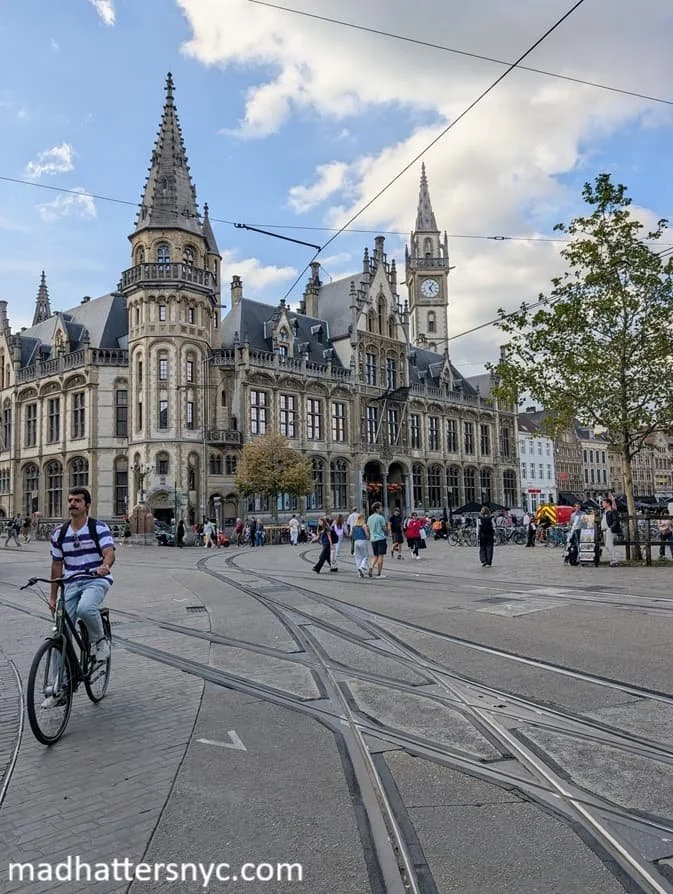
Korenmarkt
Next, stroll over to St. Michael’s Bridge, the best vantage point for Ghent’s signature skyline. Pause to admire the trio of towers — St. Nicholas’ Church, the Belfry, and St. Bavo’s Cathedral — rising above the Leie River. Continue to Korenmarkt, once the grain market and now a lively square.
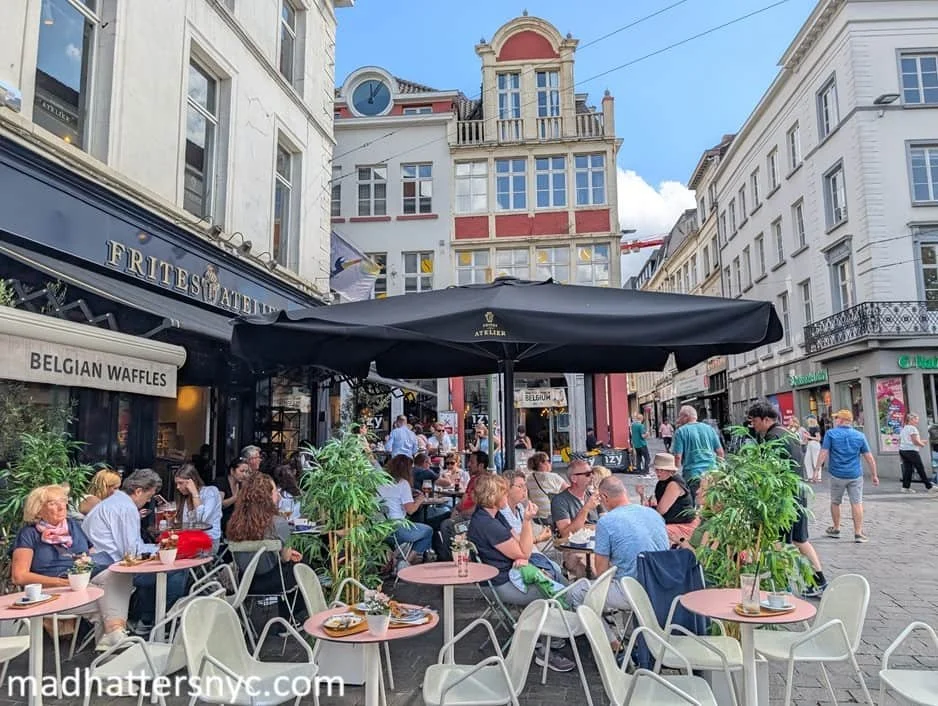
Frites Atelier
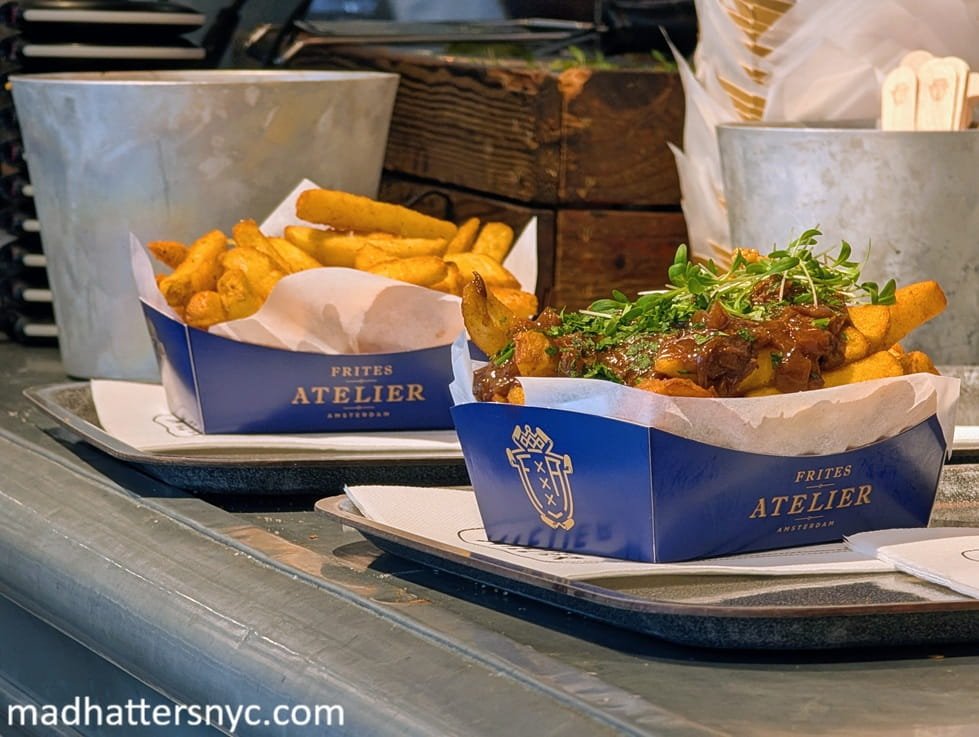
Regular Frites and Frites Special with Flemish Beef Stew
When it comes time for lunch, settle into a traditional Flemish brasserie near the Graslei or Korenlei, the two quays that frame the Leie River. Order a steaming bowl of Gentse Waterzooi, Ghent’s signature creamy chicken or fish stew. Or head over to Frites Atelier and enjoy crisp Belgian frites drenched in Flemish Stew.
Afternoon: Hidden Corners and a Van Eyck Masterpiece
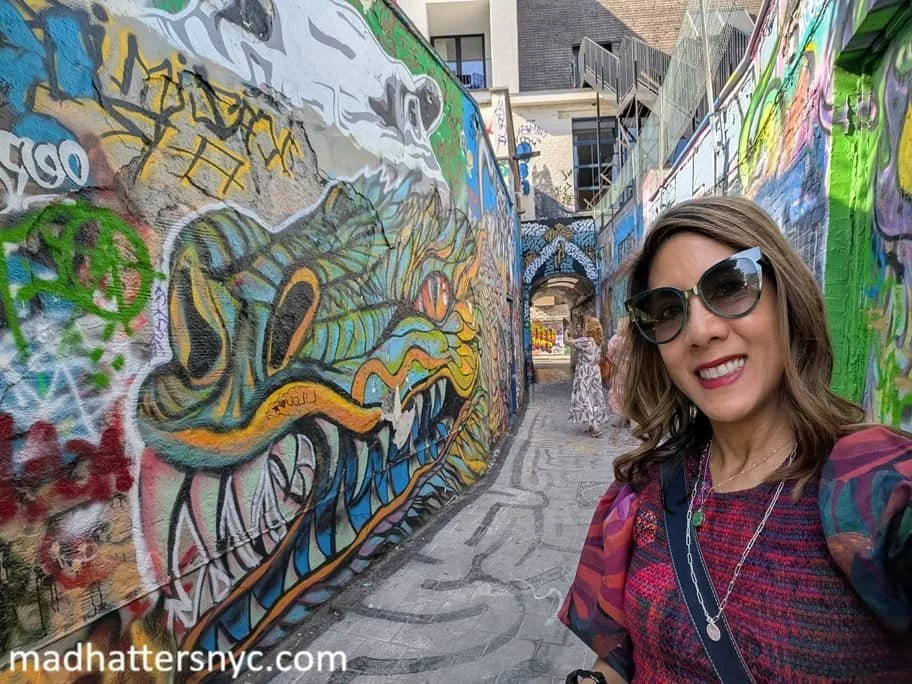
Graffiti Street

After lunch, make your way to Werregarenstraat, also known as Graffiti Street. This narrow alley doubles as an open-air art gallery, with murals shifting constantly as local artists refresh the walls. It’s a vibrant counterpoint to the city’s Gothic architecture and a favorite spot for photographers.
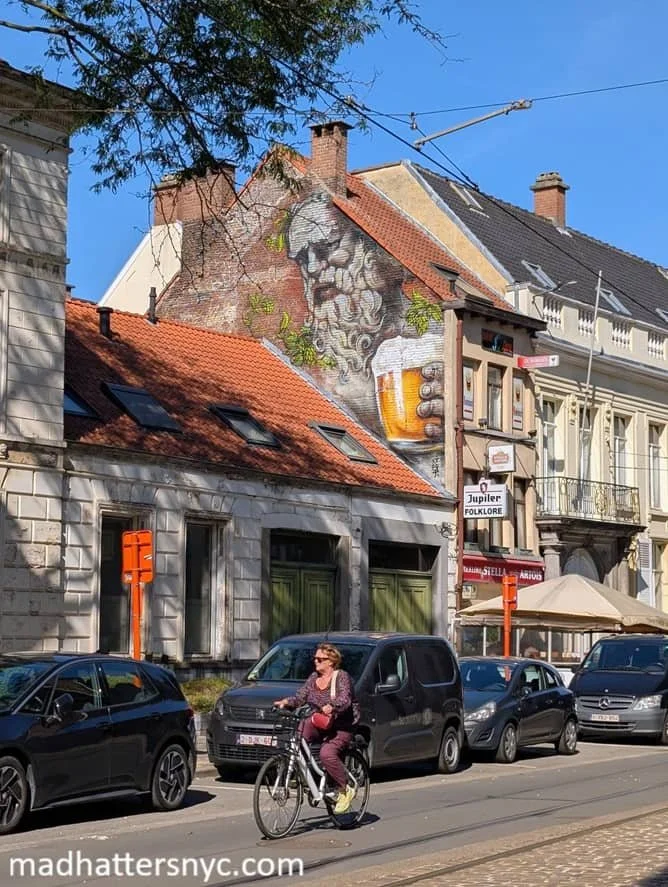
Large mural on Lange Steenstraat
If this has whet your appetite for more, Ghent has an impressive number of murals around the city. One of my favorite street artists, ROA, hails from Ghent, so it was a thrill to find his lifelike animal sketches on his home turf. But Visit Gent has a Street Art Map featuring almost 260 artworks! Download it or request a paper copy at their office, then take yourself on a self-guided tour. I’ve often found street art can be the key to unlocking a new city, taking you to new neighborhoods like with Lisbon’s street art, or making you look in unexpected corners like with Ljubljana’s street art.
In lieu of hunting down murals, you can climb the Belfry of Ghent, a UNESCO World Heritage Site and the tallest of Belgium’s famed belfries. Construction began in 1313 as a proud symbol of the city’s independence and growing wealth. Inside, exhibits trace the belfry’s role as a medieval watchtower, where guards kept a sharp eye for fires and approaching armies. Today, you can ascend (or take the elevator most of the way) to the top for sweeping views of gabled rooftops, winding waterways, and the surrounding countryside, accompanied by the gentle chime of the carillon bells.
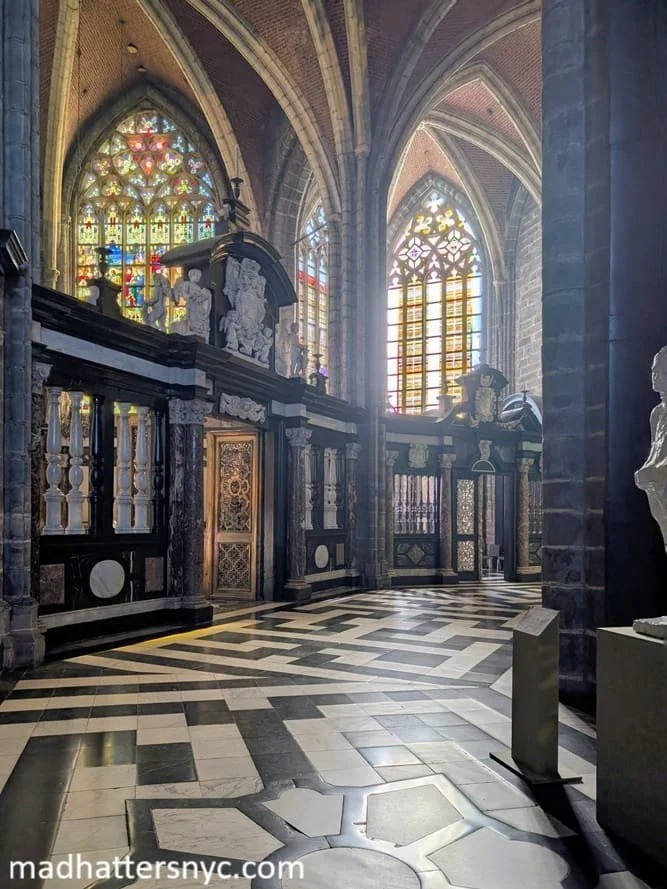
St. Bavo’s Cathedral
As the late-afternoon light filters through the stained glass, make your way to St. Bavo’s Cathedral, the spiritual and artistic heart of Ghent. This magnificent Gothic church rose over centuries on the site of earlier chapels, its soaring nave and intricate stonework reflecting the city’s prosperity and devotion. Inside lies one of the most influential works of art in Western history: The Ghent Altarpiece.
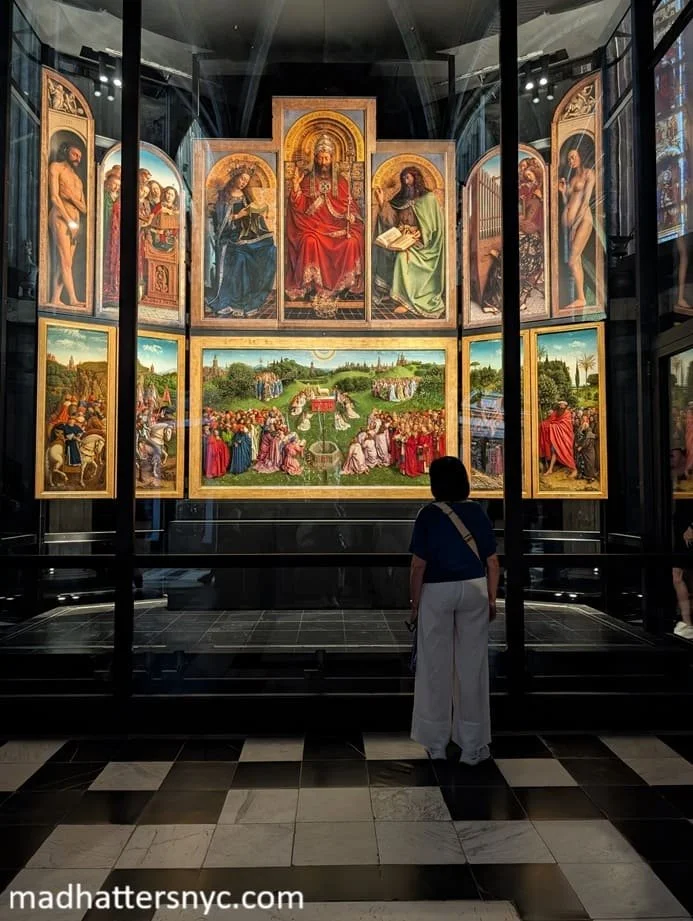
Ghent Altarpiece
Painted in 1432 by the Van Eyck brothers, this monumental polyptych revolutionized European art with its pioneering use of oil paint and luminous color. Its panels depict a sweeping vision of redemption and salvation, centered on a sacrificial lamb symbolizing Christ. Over nearly six centuries, the altarpiece has survived iconoclasm, theft, and wartime intrigue — including a daring rescue from the Nazis during World War II — adding layers of mystery to its spiritual power. Also called the Adoration of the Mystic Lamb, the recent restoration reveals astonishingly lifelike detail and vivid hues and textures. Standing before it, you feel the weight of history and the brilliance of human creativity, an experience that alone justifies a journey to Ghent.
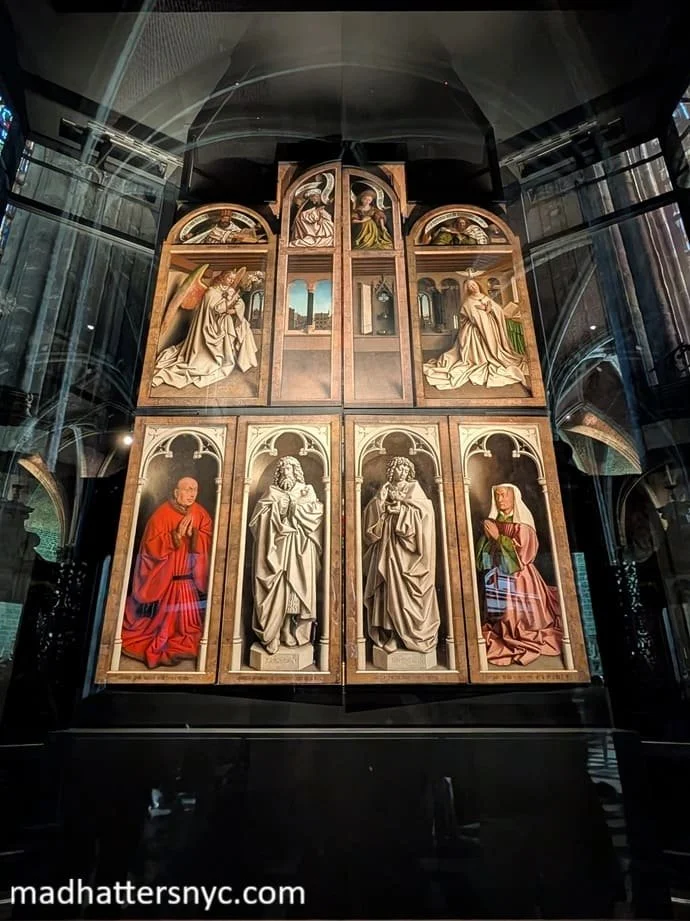
Ghent Altarpiece closed
Pro Tip: Tickets to see The Ghent Altarpiece must be booked in advance. I highly recommend selecting the last time slot of the day, so you will be able to witness the closing of the outer panels and experience the set of paintings both open and closed. I wanted to partake in the Augmented Reality Tour, so I selected the 4:00 pm time slot, which timed it perfectly. I arrived at the Ghent Altarpiece room around 4:45 pm, and stayed until 5:15 pm when the panels were closed.
Evening: A Taste of Local Cuisine
For dinner, book a table in Patershol, where centuries-old buildings now house some of Ghent’s best restaurants. Whether you prefer a cozy Flemish kitchen or a contemporary vegetarian spot, the neighborhood offers plenty of choices. Finish the evening with a Belgian craft beer—perhaps a fruity lambic or a strong, malty tripel—at a canalside bar before heading back to your hotel.
Day 2: Art Museums and a Cruise Through History
Morning: Art through the Ages at the Museum of Fine Arts (MSK)
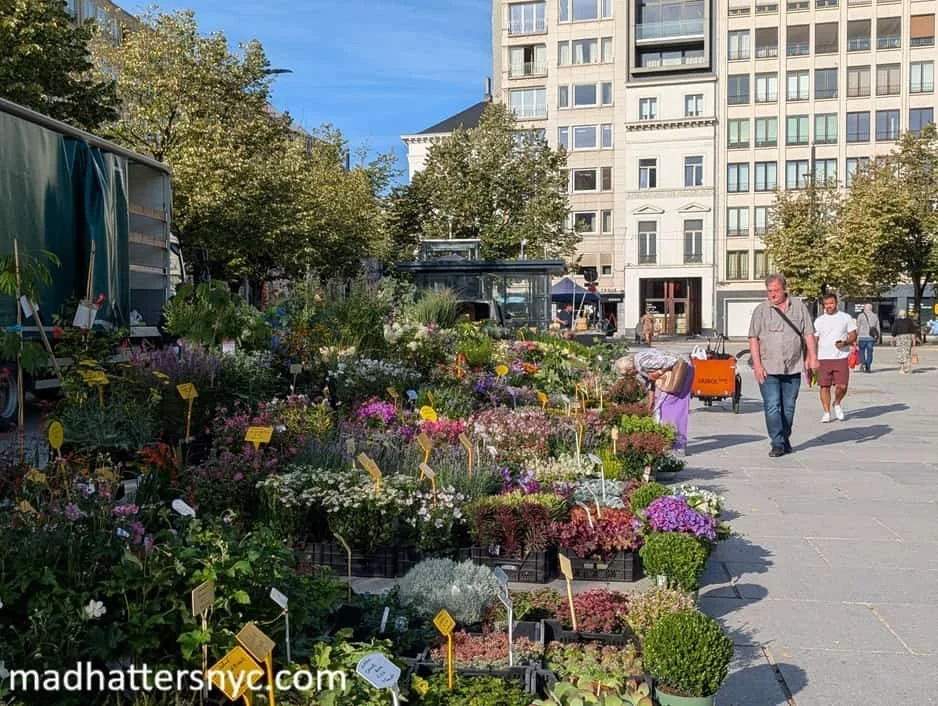
Kouter Bloemenmarkt
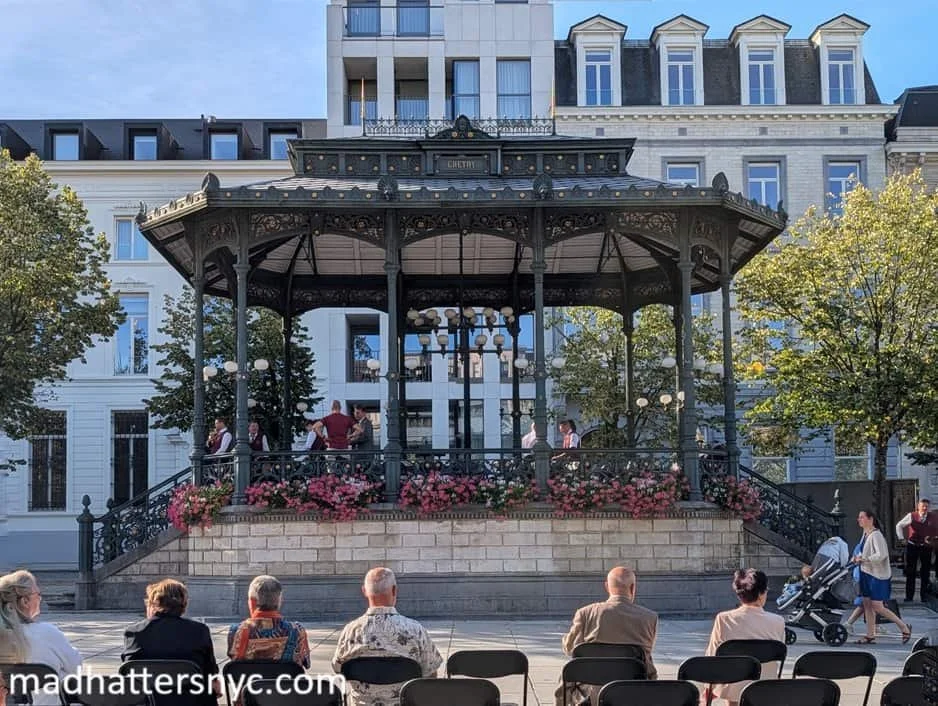
Kouter kiosk
If your second day in Ghent happens to fall on a Sunday, then you’re in luck! Make your way to Kouter Bloemenmarkt, the flower market that is a centuries-old Ghent Sunday morning tradition. Towards the center of the square, a beautiful wrought-iron bandstand forms a stage, so snag an open seat if you find one. Otherwise, you can enjoy the musical accompaniment as you leisurely stroll through the waves of colorful blooms.
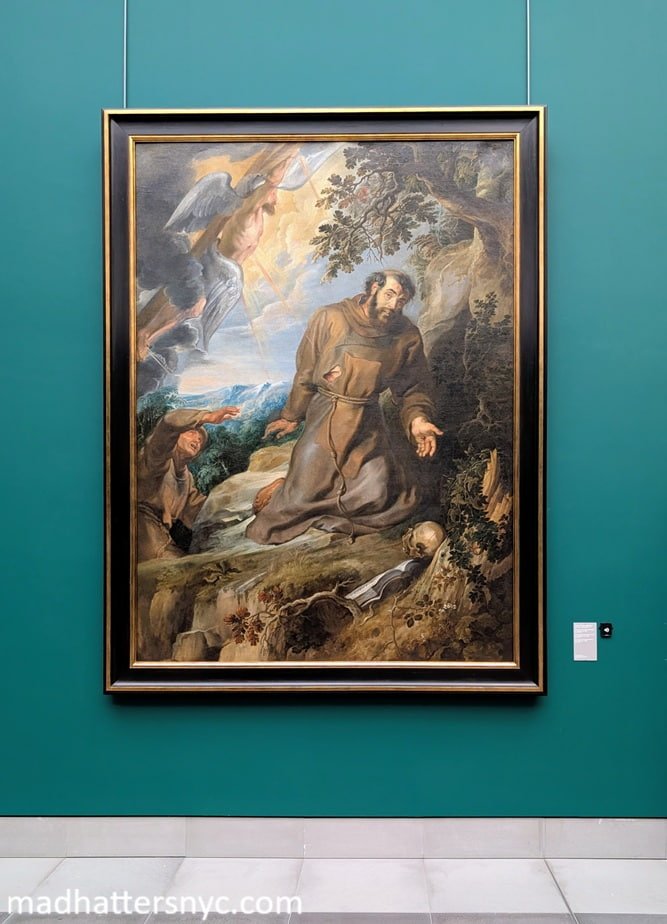
St. Francis of Assisi Receiving the Stigmata by Peter Paul Rubens
Then immerse yourself in Ghent’s vibrant art scene at the Museum of Fine Arts (the Museum voor Schone Kunsten or MSK), located in the leafy Citadelpark. This museum holds one of Belgium’s most important collections, spanning the 14th to the 20th century, with highlights from Hieronymus Bosch, Peter Paul Rubens, and James Ensor. If you’re visiting Antwerp as well, it’s a perfect complement to Antwerp’s fantastic KMSKA. But its greatest treasure is directly linked to Ghent’s most famous artwork: the Adoration of the Mystic Lamb.
For years, the MSK has served as the site of the ongoing restoration of the Ghent Altarpiece, allowing visitors to witness one of the world’s most ambitious art conservation projects up close. Behind large glass panels, skilled conservators painstakingly clean centuries of varnish and retouch delicate pigments, revealing the Van Eyck brothers’ astonishing color and detail. Watching experts carefully bring this 15th-century masterpiece back to life provides a rare, behind-the-scenes perspective that deepens appreciation for the version you saw inside St. Bavo’s Cathedral. It’s an extraordinary opportunity to see both the science and artistry involved in preserving one of Europe’s defining works of art.
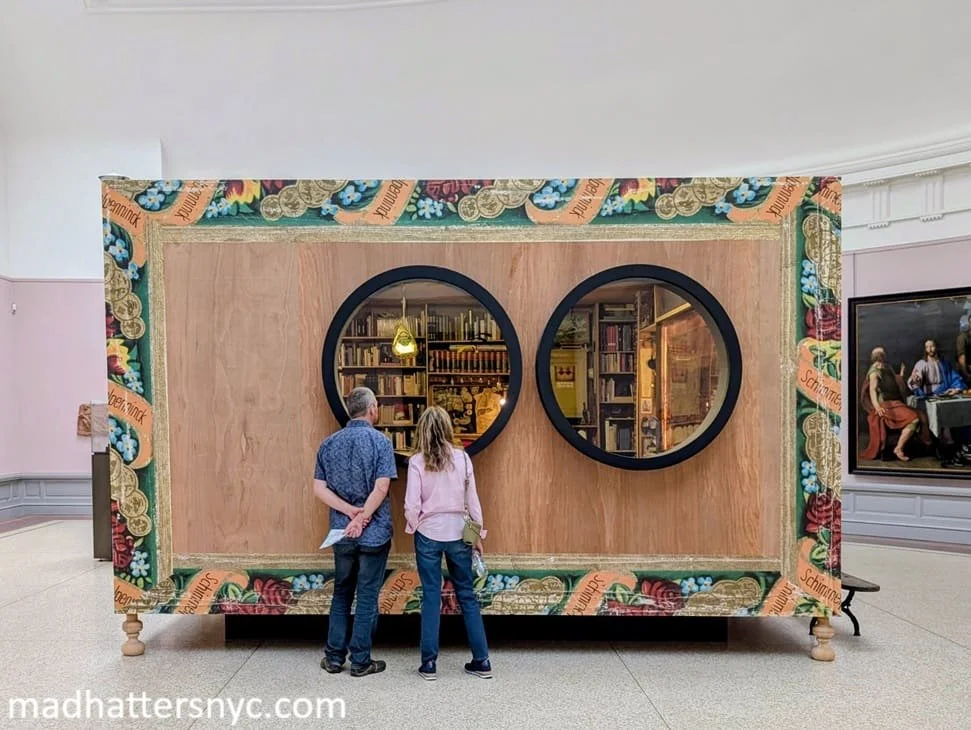
The Cigar Box exterior
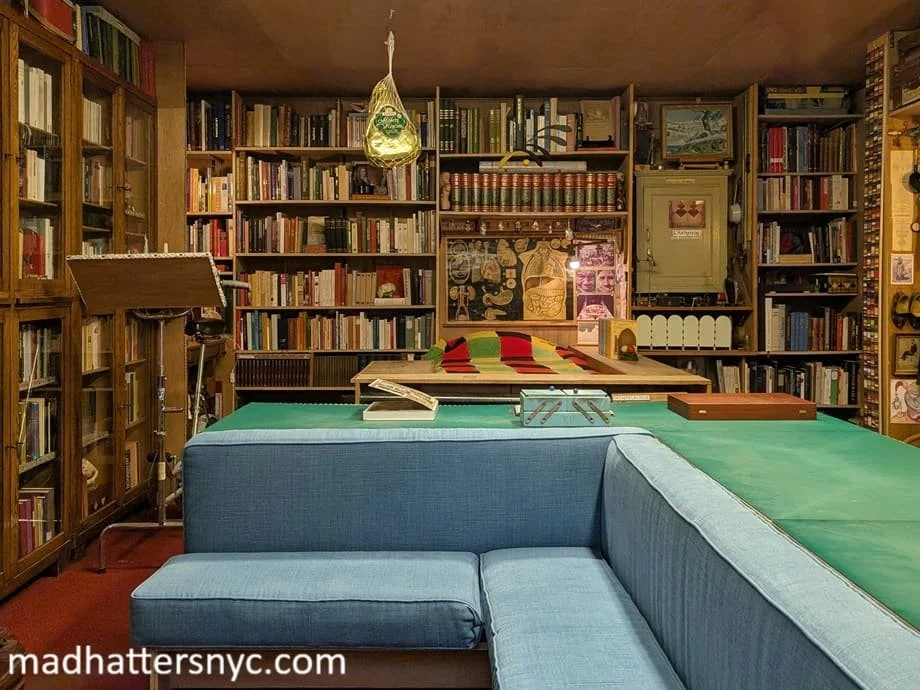
The Cigar Box interior through the porthole
An additional personal highlight for me was Patrick Van Caeckenbergh’s The Cigar Box (2017), a remarkable fusion of domestic space and conceptual art. Originally conceived as a one-room home for the artist and his family, this structure doubled as a studio, a personal archive, and a cabinet of curiosities. Inside, artworks, books, and everyday objects create a picture of human curiosity.
Pro Tip: Most museums in Ghent are closed on Monday, so plan your itinerary carefully to ensure you don’t miss out.
For lunch, make your way back to the city center. Ghent proudly calls itself the “vegetarian capital of Europe,” and lunch is the perfect time to taste why. Try Le Botaniste, a stylish plant-based bistro serving hearty grain bowls and organic wines, or O'yo Sint-Baafs for a fast casual option. Even meat-eaters will appreciate the city’s commitment to flavorful, eco-friendly dining.
Afternoon: Canal Boat Tour and Riverside Stroll
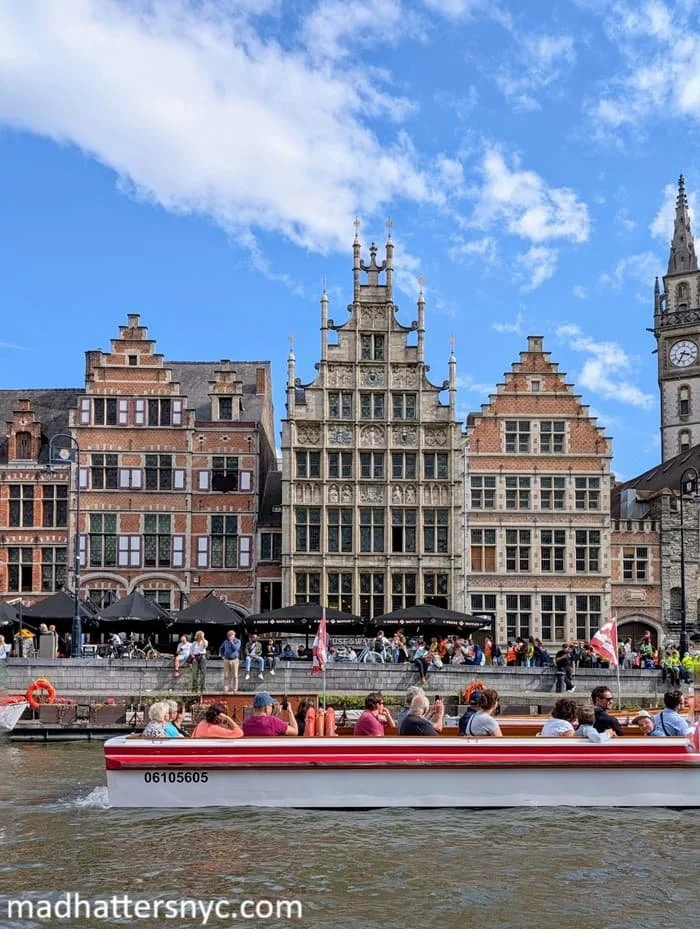
View of Graslei from the River Leie
After a morning indoors, see Ghent from a new perspective with a guided boat tour of the canals. Across from Gravensteen Castle, a kiosk for waterway tours will match you with any number of vendors offering tours of varied flavors and lengths. Whichever one you go with, seeing Ghent from the water is a must. The boats glide past the city’s most photogenic landmarks, including the medieval guild houses and the imposing Gravensteen Castle. As you drift beneath arched stone bridges, your guide shares stories that capture Ghent’s lively history.
Pro Tip: Don’t discount the Ghent Hop On Hop Off Water Tram, which is a fun way to travel to different parts of the city. I completed the full circuit, which takes just under 2 hours. Additional bonus: it’s free with CityCard Gent.
When you disembark, take time for a leisurely riverside stroll. The Graslei and Korenlei quays are particularly lively in the late afternoon, with outdoor terraces perfect for a coffee, local beer, or a sweet Belgian waffle as the city begins to glow in the golden hour.
Evening: Farewell to Ghent
For your final night, choose a restaurant that celebrates Ghent’s culinary diversity. Publiek, a Michelin-starred spot with a relaxed atmosphere, offers inventive tasting menus, while Pakhuis serves upscale Belgian classics in a dramatic former warehouse. After dinner, linger along the canals one last time. The illuminated façades, gently rippling water, and distant carillon bells provide a fittingly magical send-off for your 2 days in Ghent.
Practical Tips for Visiting Ghent
Getting There
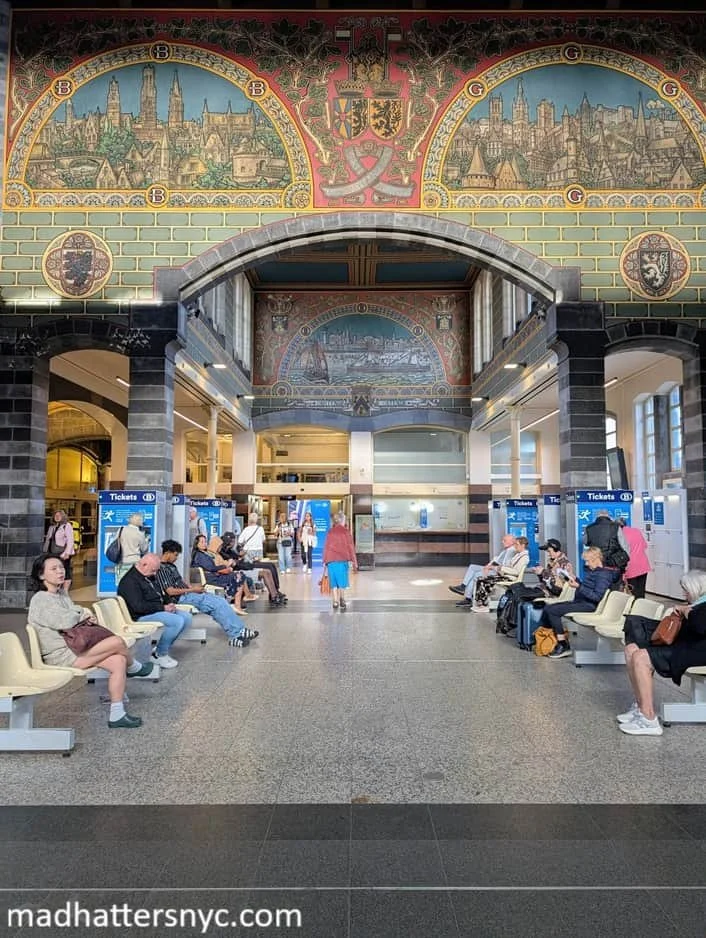
Ghent is easily reached by train from Brussels, Bruges, or Antwerp, making it an ideal stop on any Belgium itinerary. From Brussels Airport, take a direct train to Gent St Pieters station (about 1 hour). High-speed connections from Paris, Amsterdam, and London via Brussels also make Ghent an accessible European city-break destination.
Getting Around
The historic center is compact and largely pedestrianized, so walking is the best way to explore. Ghent’s excellent tram network covers longer distances, including the route between Gent St Pieters Station and the city center (tram lines 1 and 2). Cycling is also popular.
When to Visit
Ghent is beautiful year-round, but the best times to visit are spring (April–June) and early fall (September–October) when the weather is mild and the canalside cafés are lively but not overcrowded. July’s Gentse Feesten, one of Europe’s largest cultural festivals, brings ten days of music, theater, and street performances, but also larger crowds and higher hotel rates.
Tickets & Passes
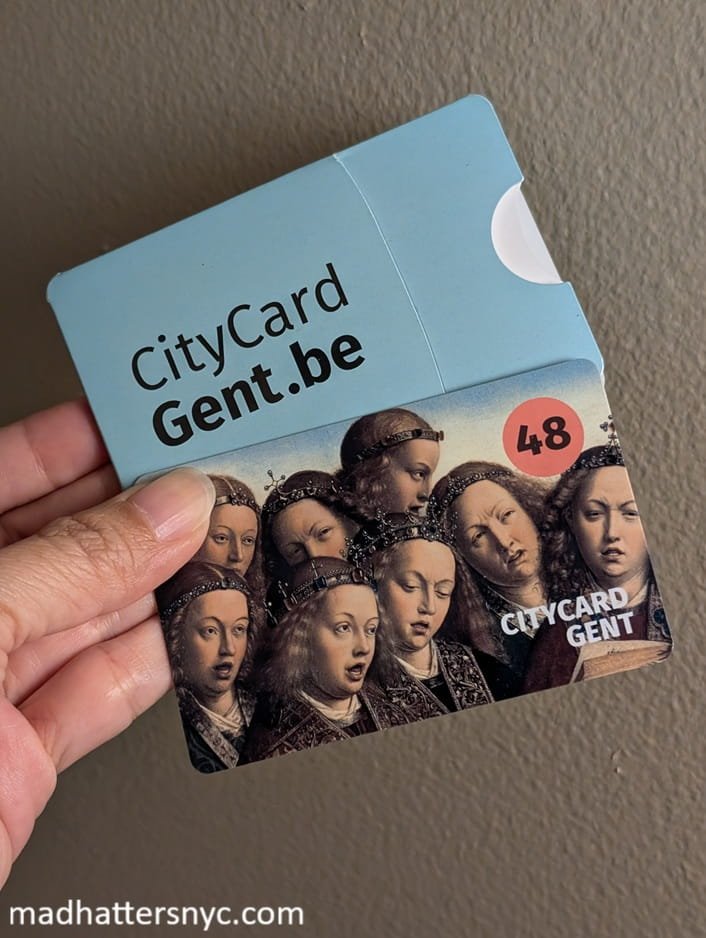
If you plan to visit multiple museums, the CityCard Gent is worth considering. It provides access to key attractions—including Gravensteen Castle, St. Bavo’s Cathedral, and the Museum of Fine Arts—as well as unlimited use of trams and buses for 48 or 72 hours.
Language & Money
Dutch is the official language, but I found English is widely spoken everywhere. Belgium uses the euro (€), and most shops and restaurants accept credit cards.
Conclusion
Two days in Ghent will uncover a city where medieval beauty and modern creativity meet at every turn. Ghent rewards travelers with art, history, and a vibrant riverside atmosphere that lingers long after you leave. Whether it’s your first visit to Belgium or a return trip, Ghent promises a weekend you’ll never forget.